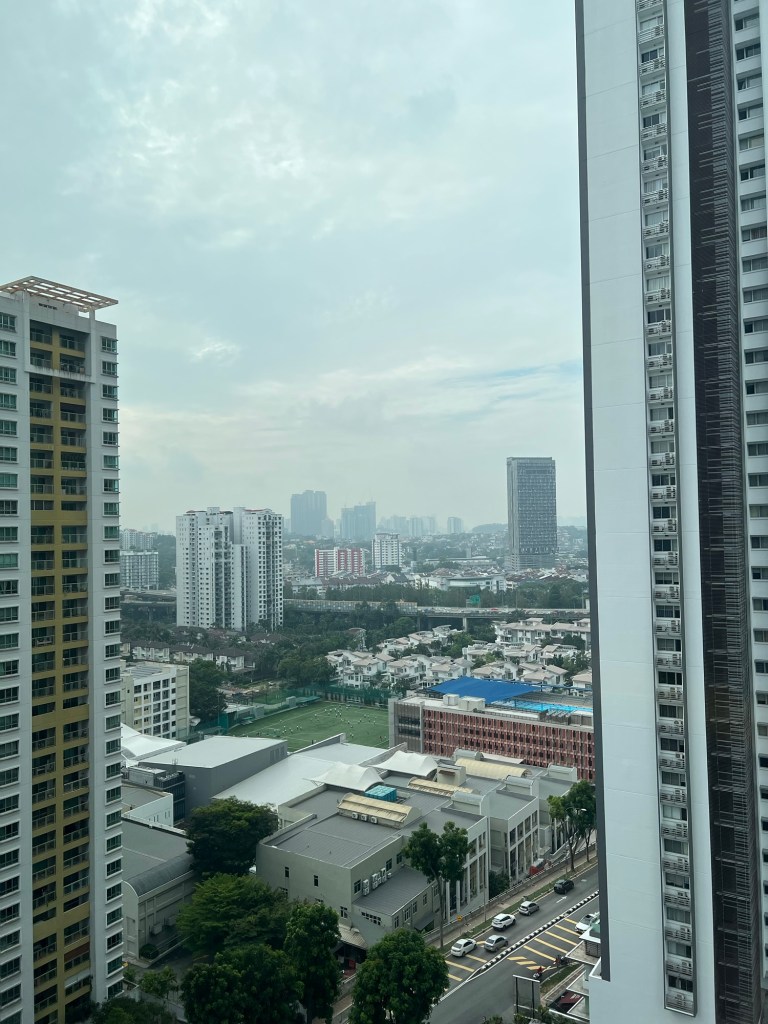
Coming to Malaysia has been unexpectedly challenging for me, and it’s interesting in a way I’m struggling to explain.
On the plane ride over, Sara and I were both so excited. It felt different from almost every other flight we’ve taken on this trip. For the first time since I arrived in Thailand for study abroad, I was going somewhere without any real plans immediately upon arrival.
Usually, arriving somewhere means the clock starts ticking. We only have a few days, so we want to get started. There’s pressure to sleep on the flight, pressure not to waste the first day, pressure to figure out what we’re doing next.
Coming to Malaysia was different.
We knew we were coming here mostly to spend time with family and recharge before Korea. Sara grew up here and I’ve been twice before, so neither of us felt any urgency to immediately start exploring.
I watched two movies, drank wine, barely slept, and didn’t feel bad about any of it.
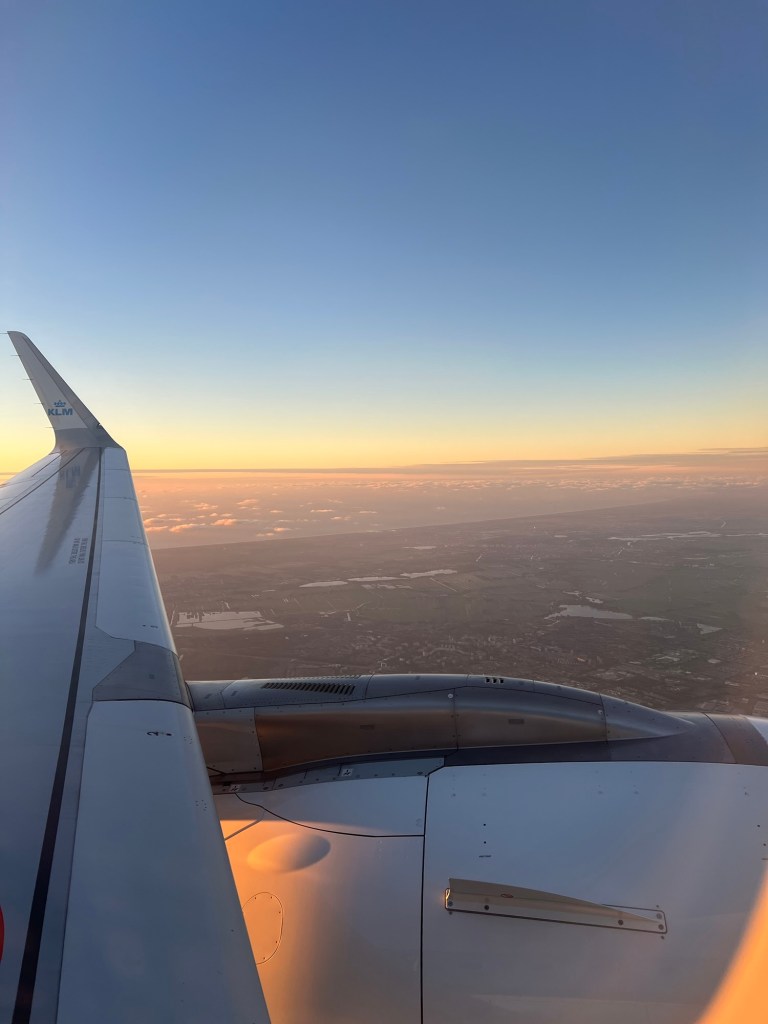
When we finally arrived, the combination of minimal sleep and jet lag made it feel like a dream.
It had been three years since I was last in Malaysia, and after spending the last month in Europe, suddenly seeing so many Asian faces again was strangely overwhelming.
The food. The languages. The humidity. The traffic. The malls filled with restaurants stacked on top of restaurants.
I think I had become a little numb to Europe by the end of the month. Things that had felt new when we first arrived slowly became normal. Then, within the span of a flight, everything changed again.
Even the way I’m looking at Malaysia feels different this time.
I’m noticing the Malays, Chinese Malaysians, and Indian Malaysians around me and wondering about their lives and how all of these different cultures fit together here. I’m noticing how many languages seem to exist in the same space. I’m noticing the service because of how different it feels from Europe.
Our first meal was Korean barbecue with Sara’s family. The servers cooked the meat for us, cut it, replaced the grill, mixed our noodles, and seemed to know exactly when we needed something.
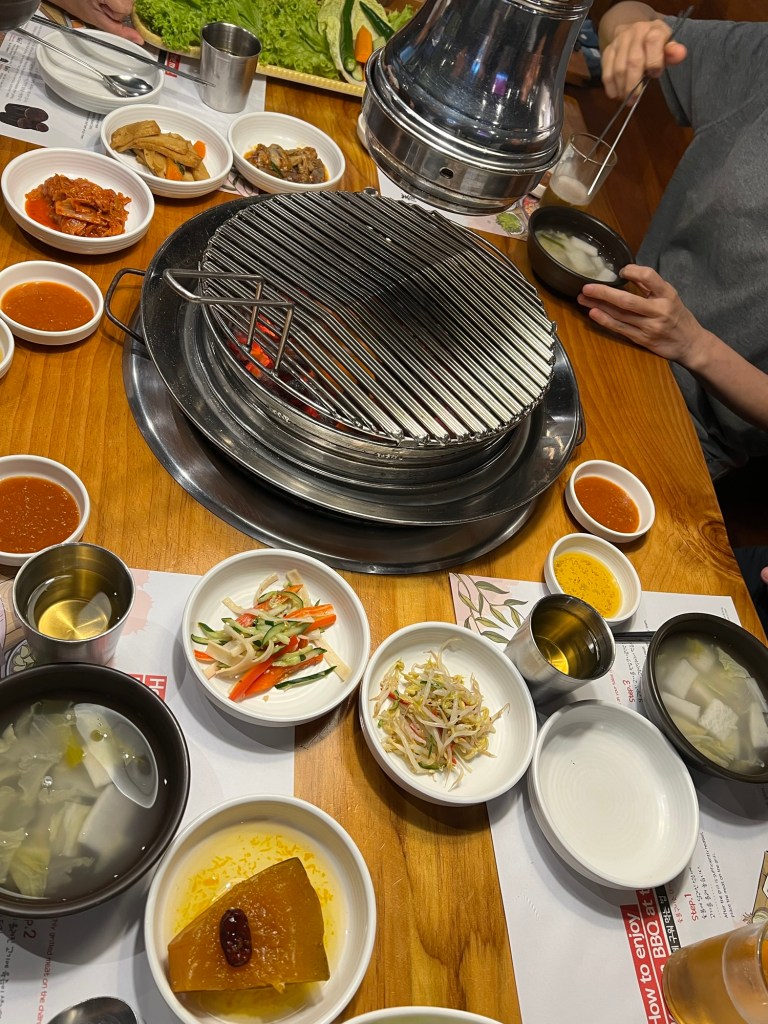
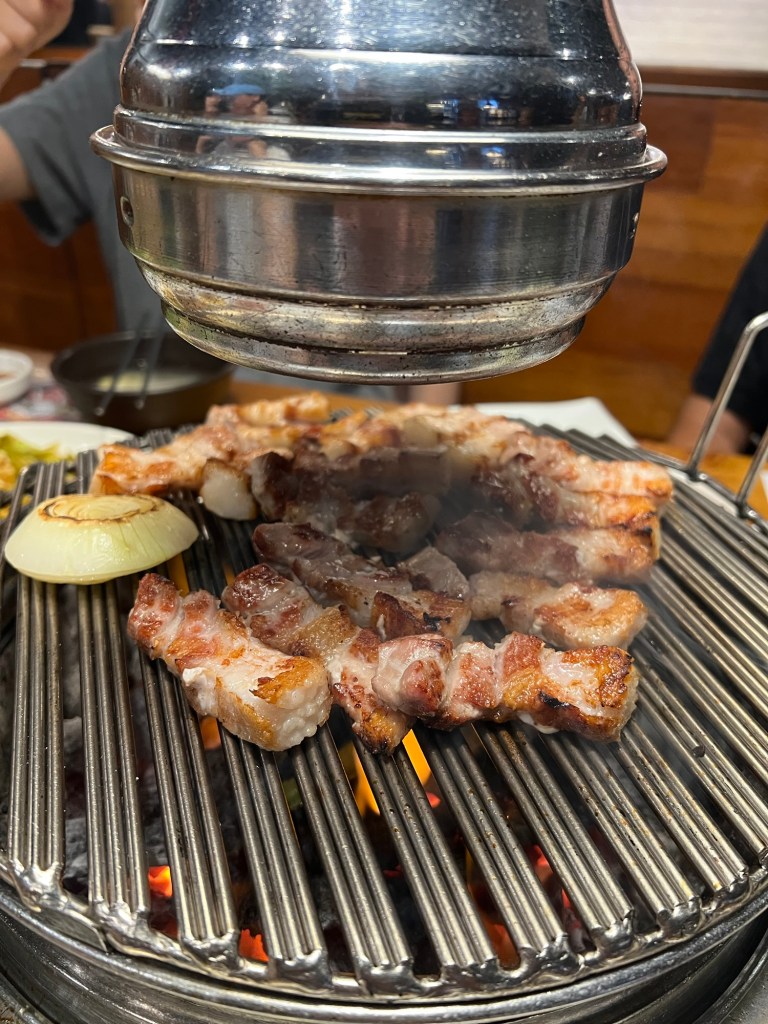
Sara’s mom was speaking Korean to them even though they didn’t understand Korean, and somehow they still seemed to understand what she wanted.
“Language nunchi,” Sara called it.
The food itself has also reminded me how much I love eating this way.
I like contrast.
I like eating something spicy and then something sour. Something sweet followed by something salty. Something rich and creamy with something acidic or pickled beside it. I like having multiple things on the table and bouncing between them, combining them differently every time.
Even within Malaysian food, something like pan mee feels completely different from beef rendang, which feels completely different from roti canai. They come from different cultural traditions and taste almost nothing alike, but all of them are Malaysian.
I think that is what feels so exciting to me about being here.
Malaysia feels like multiplicity.
Different people, languages, religions, and food traditions somehow occupying the same place without necessarily becoming the same thing.
Honestly, I had only been here for a couple of days when I started writing this, and I already felt overwhelmed by it all. Part of me was overjoyed to be here and didn’t want to leave, but another part of me felt like I was in Lost in Translation, staring at everything around me and trying to process where I was.
It was also hot, and I was tired, but there was another part of me that kept thinking I should be doing something.
Planning Korea. Catching up on writing. Going somewhere. Seeing something.
It’s something I’ve been struggling with since getting here.
For once, we don’t really have to do anything.
We can just enjoy being here with family.
We went to get pan mee with Sara’s mom at one of our favorite restaurants, Jojo Little Kitchen. I had been dreaming of going back for the last three years because the first time was so memorable.
Pan mee is traditionally a noodle dish made with handmade noodles, with roots in Hakka Chinese cooking. In Malaysia, dry versions like chili pan mee have become incredibly popular. It’s one of those foods that illustrates how many Malaysian foods (and people) come from somewhere else but take on lives of their own here.
Sara is a soupy noodle kind of girl, and I’m a dry noodle kind of guy, so we can order both and share.
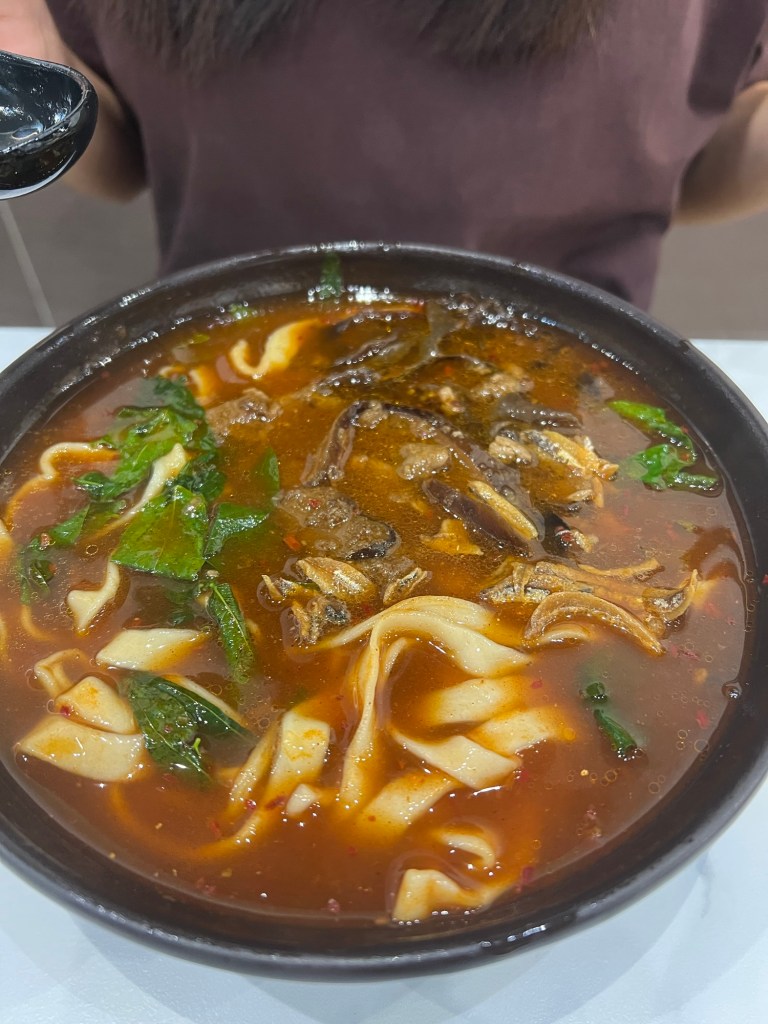
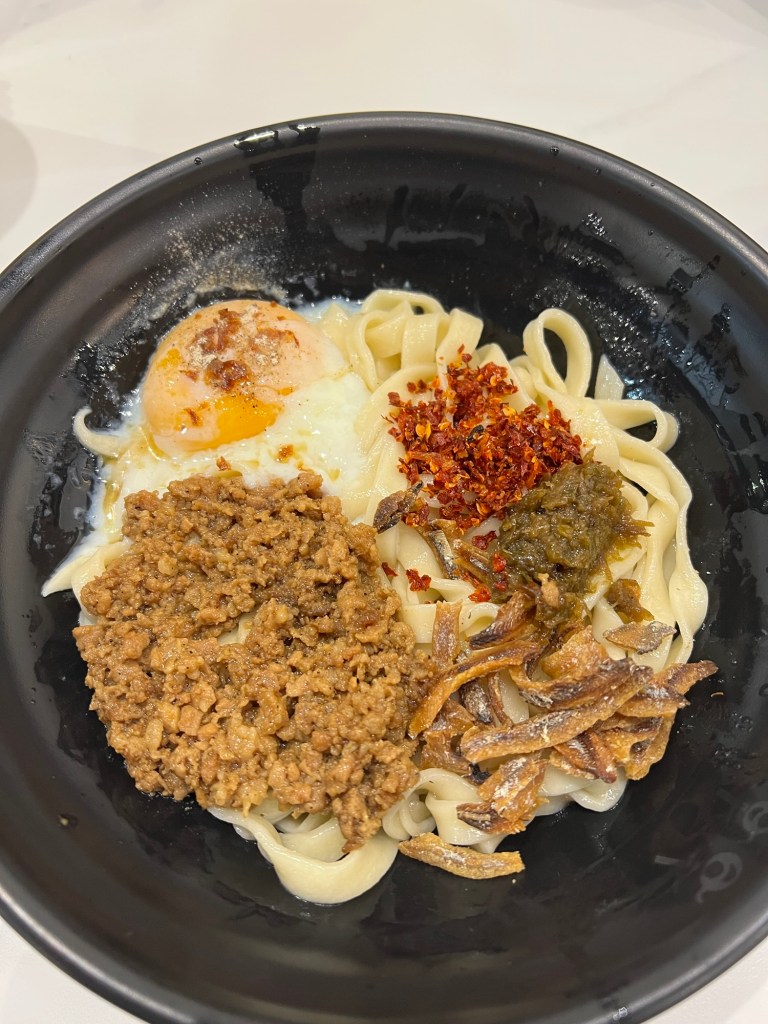
The pan mee was just as good as I remembered. It was nostalgic, very spicy, and after such a long time without much spicy food, it really hit the spot.
Much of the week was spent this way, eating at the restaurants Sara loved growing up and spending time with her family.
My mother in law really spoiled us. Every morning, she got up early to cook so that when lunchtime came around, we had a homemade meal waiting for us.
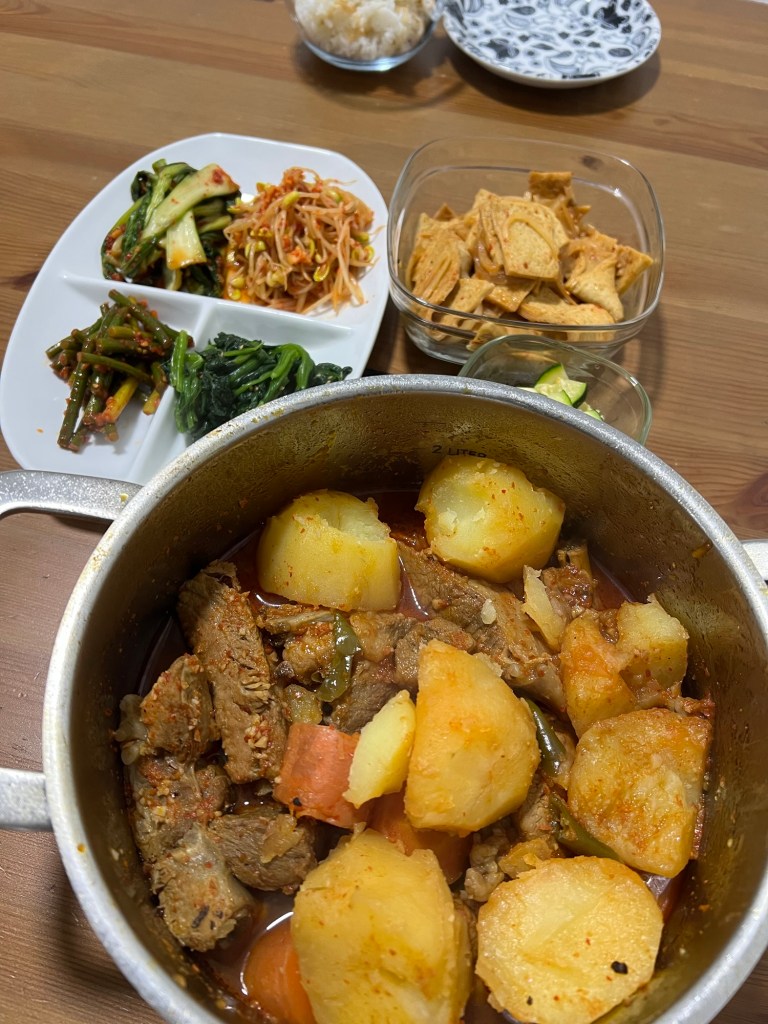
Homemade Korean cooking feels very different from going out to eat at a Korean restaurant in the States. The 반찬, or banchan, that Sara’s mom makes are often very simple, but the meal always feels perfectly balanced.
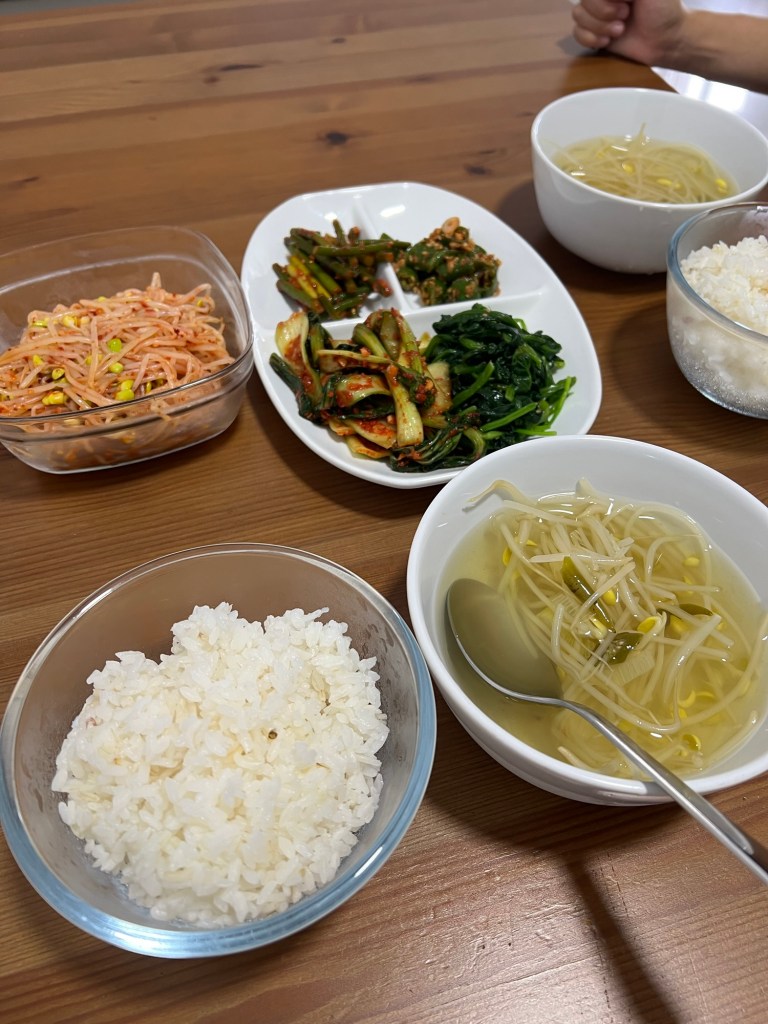
I think that is my favorite thing about Korean cooking.
If something gets too salty or sweet, there is something spicy or sour to cleanse the palate. No matter what the main dish happens to be, there are side dishes that somehow seem to balance everything out.
But there is one dish in Malaysia that is, without a doubt, one of my top three favorite dishes of all time.
We refer to it as fish head curry, and it has both Chinese and Indian influences.
There is a restaurant Sara’s family has been going to for years, and simply going there has always been a culture shock for me.
The people working there are Malaysian Chinese, and although the restaurant is what an American food critic might call “no frills,” the speed, quality, and efficiency of the operation is top notch.
When we arrived, the place was packed, with people waiting outside. I thought we had no chance of getting in.
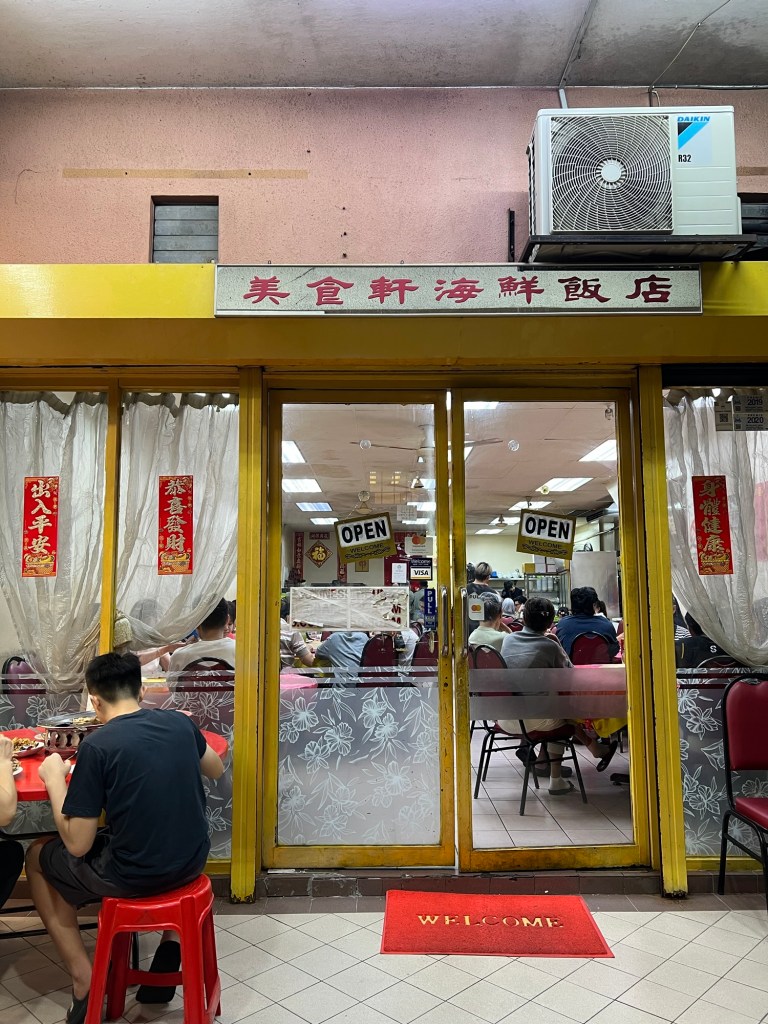
Sara talked to a worker and asked if there was a table available. He shook his head frantically as if to say, “Can’t you see?”
Then he asked how many people we had and said there might be a table opening up for us in a few minutes.
A few minutes passed and we saw the people at one table get up and leave, but another group inside immediately moved over to take it.
The worker came back and said it would take about twenty minutes longer and that we might have to share a table with someone. Then he handed us a menu and immediately followed up with, “What do you want?”
When we hesitated, he started suggesting things like sweet and sour pork, which Sara and I thought was funny.
Sara’s family knew the drill.
Fish head curry. Shrimp in butter sauce. Stir fried morning glory. Mantou, fried Chinese buns.
At one point, we tried to order another fish dish and he stopped us.
“You’ve already ordered a fish dish. You should get something else.”
The cultural difference was so funny to me.
Honestly, he was right.
We ended up getting inside about fifteen minutes later. Within a minute of sitting down, our food was hot and ready on the table.
“The Asian efficiency,” Sara calls it.
Really though, I find it fascinating how the workers might be considered unfriendly by American standards, while at the same time the actual service feels far greater than what I’m used to back home.
They don’t sell alcohol, but they let us bring beer inside and give us glasses to use.
My comparison is that it’s like an Acts of Service culture versus a Words of Affirmation culture.
The fish head curry is probably my favorite Malaysian dish.
I don’t really know how to describe it.
It isn’t fully Chinese or Indian.
The curry tastes completely different from Thai curry or Japanese curry. It isn’t especially sweet. I think the base comes largely from South Indian spices, but there is something in it that gives it a hint of sweet and sour.
It’s salty and creamy, but not the kind of creamy that comes from milk. The saltiness isn’t overpowering either.
Actually, no single flavor seems to stand out above the rest, and that is probably why I love it so much.
Everything just works together.
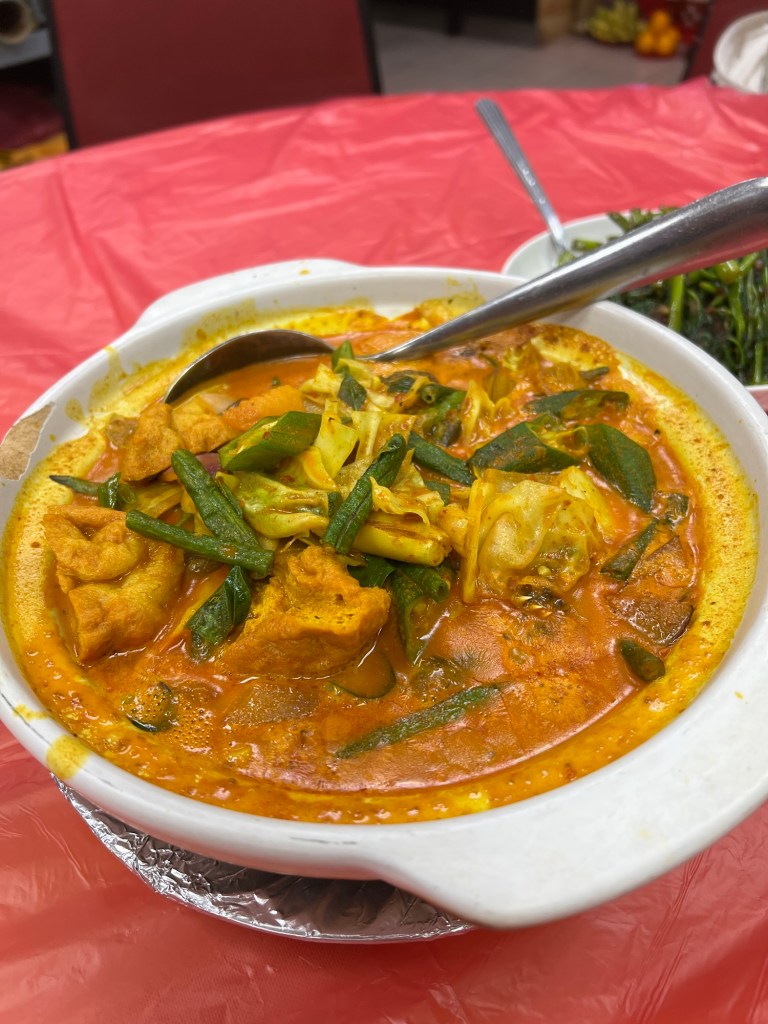
But as much as I love the fish head curry, I really love the shrimp in butter sauce too.
I feel like I could drink the butter sauce. It’s that good. It is rich without feeling too heavy. We dip the mantou into it, take a bite, then chase it with a glass of beer. The perfect sequence.
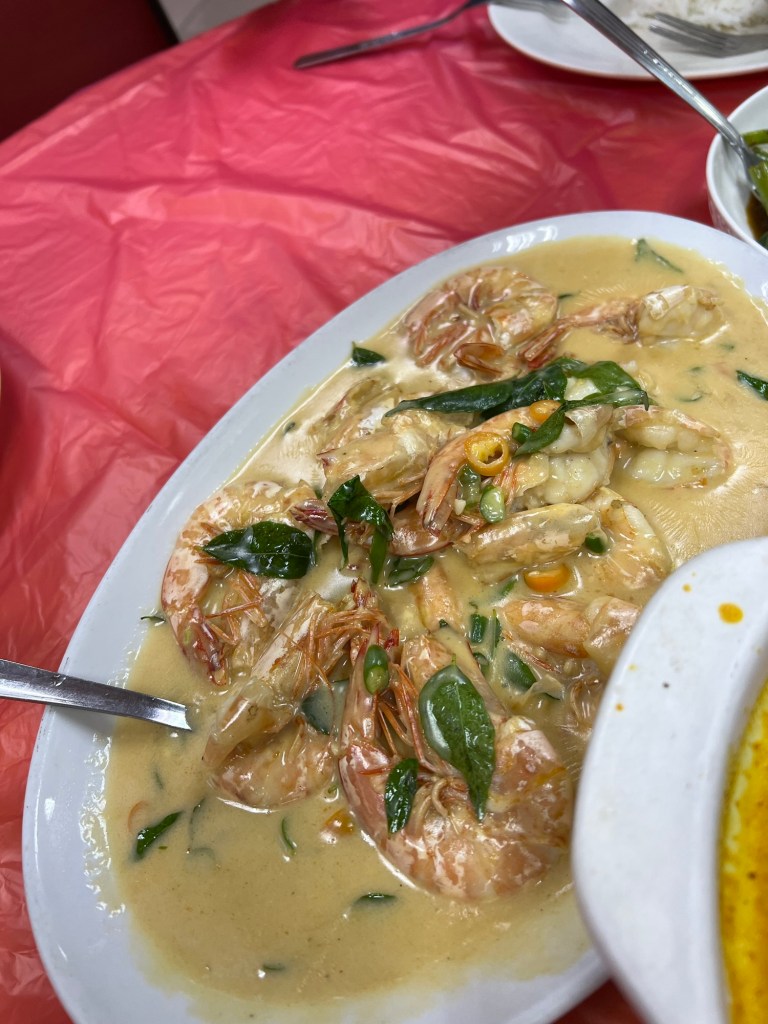
As you can see, I’m passionate about this meal.
What’s crazy, though, is that I feel this way about almost every meal I have in Malaysia.
Every meal feels like a life changing experience.
I know I can be a bit dramatic when it comes to food, but I genuinely think Malaysian cuisine is some of the best in the world.
What I love most is that saying “Malaysian food” barely explains anything.
Fish head curry, nasi lemak, mee goreng, roti canai, beef rendang, nasi kandar. There is Malaysian Chinese food, Malaysian Indian food, Peranakan food, mamak food, and all of the places where those categories begin blending into each other.
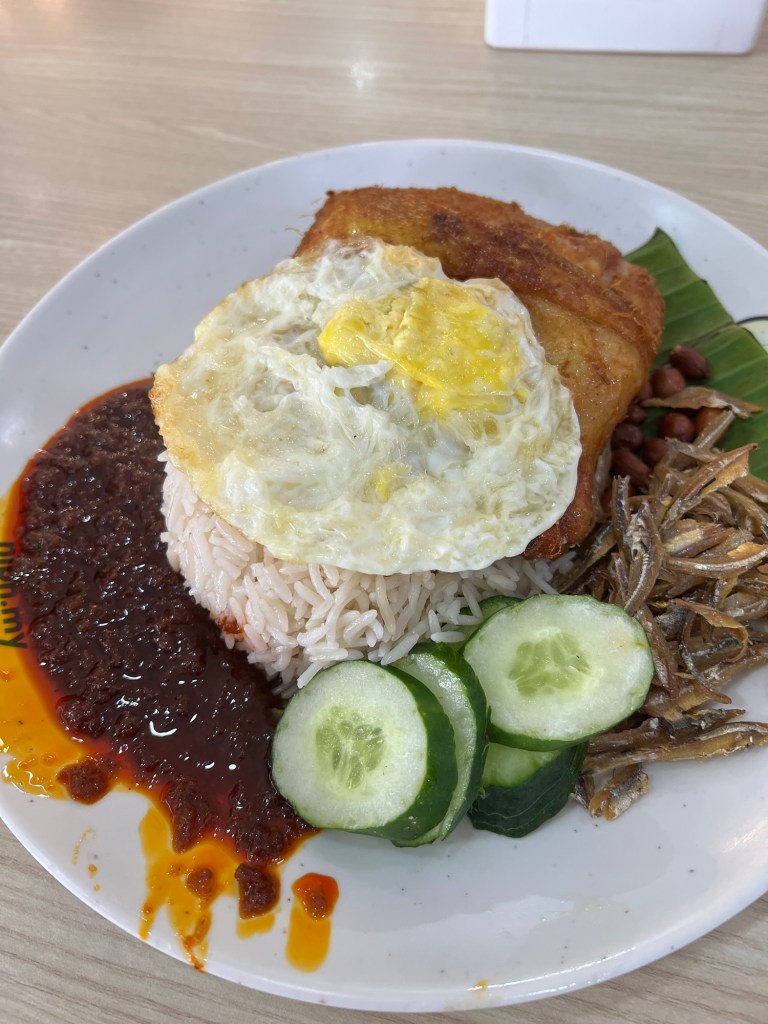
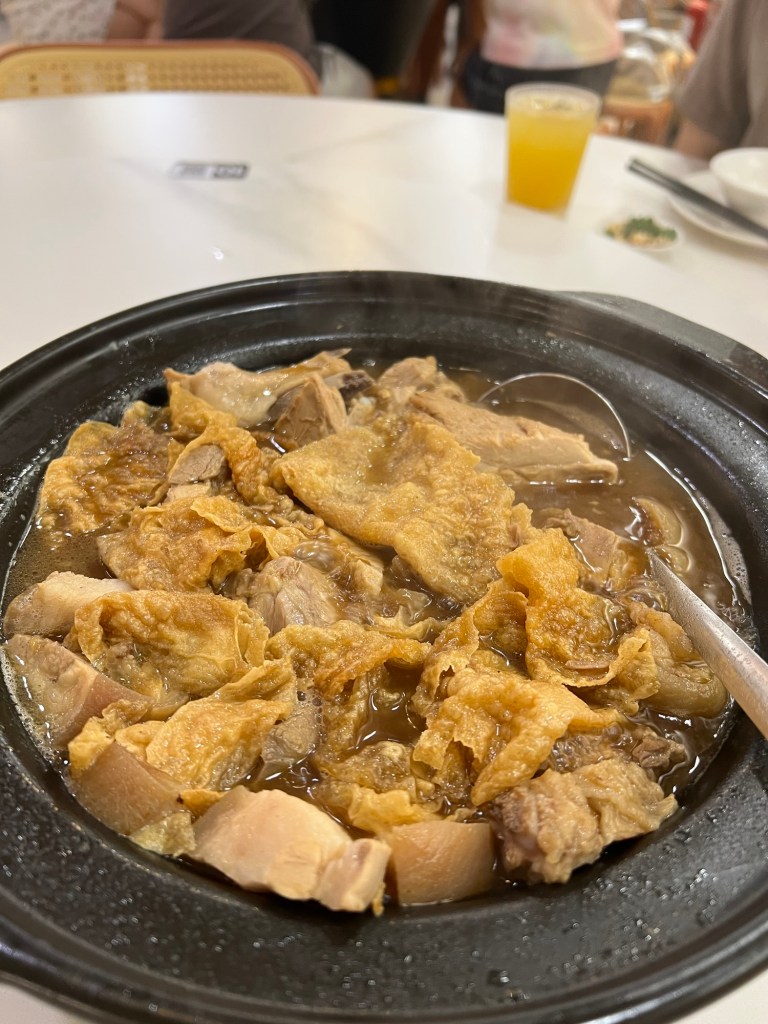
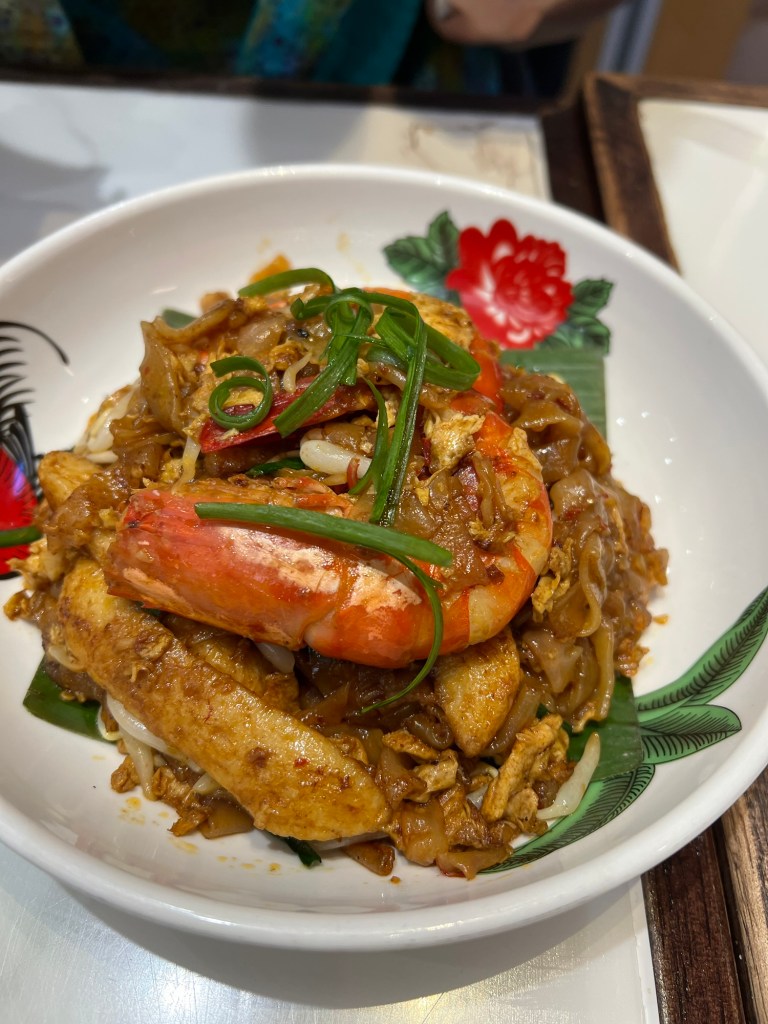
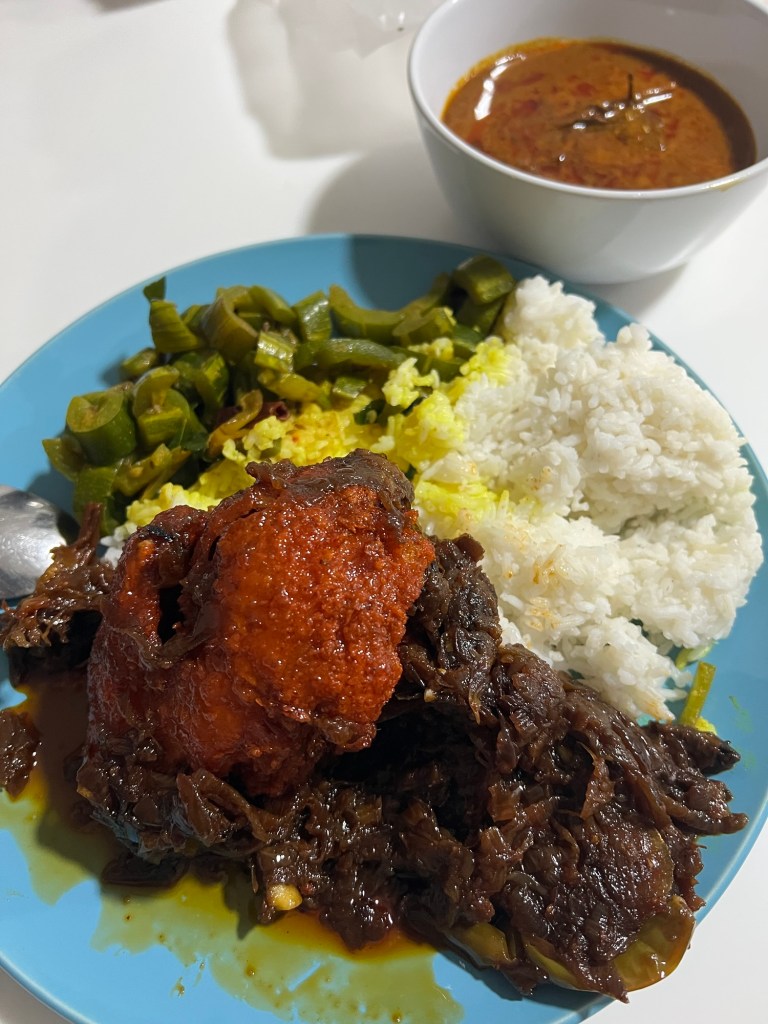
There is always another rabbit hole.
It’s funny because I started writing this post with this strange feeling of being in limbo after leaving Europe. Sara could see that I was feeling off.
I felt like I was supposed to be doing something.
Exploring more. Writing more. Preparing for Korea. Making better use of the time.
Looking back on the week, most of my favorite moments here have been simple.
Eating pan mee with Sara and her mom.
Sitting around the house eating food her mom cooked.
Going back to a restaurant her family has visited for years.
Driving around Kuala Lumpur and staring out the window.
Eating. Talking. Resting.
I knew absolutely nothing about Malaysia when I first came here in 2019.
I remember being surprised by the Islamic influence and confused by how many Indian restaurants I saw. I didn’t even really understand what Malaysian food was. At first, much of it just looked like Indian food to me, but I was so wrong.
Malaysia seems difficult to understand if you keep trying to separate everything into neat categories.
Malay. Chinese. Indian.
Muslim. Buddhist. Hindu.
English. Malay. Mandarin. Tamil.
Everything has its own history and identity, but everything has also spent generations living beside everything else.
Maybe that is why “multiplicity” feels like the perfect word to describe what I am seeing.
I still don’t know that much about Malaysia, but the more I observe, the more obvious that becomes.


Leave a comment