I lived in Portland for six years, and I still wouldn’t call myself an expert on Portland.
I know a lot about the area, certainly.
I know places that I love and places that I don’t. I know streets that bring back specific memories. I know restaurants I would recommend and neighborhoods I would tell someone to explore.
But after six years, there is still so much of Portland I don’t know.
I’ve been thinking about that a lot while traveling.
It is incredibly easy to spend a few days somewhere and start developing an idea of what that place is.
You arrive in a city. You walk around, you ride the public transportation, and you eat at restaurants. You notice the people around you.
Maybe the streets are clean, maybe they aren’t. Maybe everyone seems friendly, maybe not. Maybe the restaurants are empty at 6pm but packed at 10pm. Maybe you don’t see many people who look like you.
Slowly, these observations start becoming conclusions.
“This city is really dirty.”
“People aren’t friendly here.”
“This place isn’t very diverse.”
“This city is overrated.”
I understand why we do this, because part of traveling is trying to understand where you are, and we naturally look for patterns. We compare things to places we already know. We notice differences because the differences are interesting.
I do this constantly.
But I think there is an important difference between saying, “This is what I experienced,” and saying, “This is what this place is.”
The longer I travel, the more uncomfortable I become with the second one.
If someone visited Portland and spent three days around Powell’s, Voodoo Doughnut, the waterfront, Pioneer Courthouse Square, and Old Town, they could develop a very real impression of Portland.
Maybe they would think Portland was dirty and full of homeless people.
Maybe they would think the city wasn’t very diverse.
Maybe they would think Portland was extremely walkable because they spent their entire trip walking between attractions in the center of the city.
None of those observations would necessarily be dishonest, because they would have really seen those things.
After living there for six years, I would also know how much they hadn’t seen.
They wouldn’t have experienced Division Street in Southeast Portland, Alberta in Northeast, or Mississippi Avenue. They would have missed some of my favorite areas around NW 21st and 23rd.
They wouldn’t know what it feels like to commute through the city on a rainy Tuesday morning in February, and they wouldn’t know the suburban areas where huge portions of the population actually live.
They wouldn’t know what it feels like to have your favorite grocery store, your usual walking route, your neighborhood coffee shop, or the restaurant you go to when you don’t feel like thinking about where to eat.
They would know the Portland that they encountered, and although that Portland is very real, there are many other Portlands.
I think that is the important distinction.
The Portland I know is just one of many, and it’s easy to lose sight of the fact that I will only ever know one version of every city I travel to.
I’ve been thinking a lot about this idea, that there are countless versions of every city in the world.
Barcelona is a different city for a Filipino immigrant than it is for a Catalan native, or for someone who moved there from Valencia.
Madrid is a different city for someone who grew up there than it is for a Mexican immigrant, an Italian immigrant, or someone who arrived from another part of Spain.
And I think all of these places we’ve been to are very different for an American traveler just passing through.
Being in Lisbon, especially, has made me think about this concept.
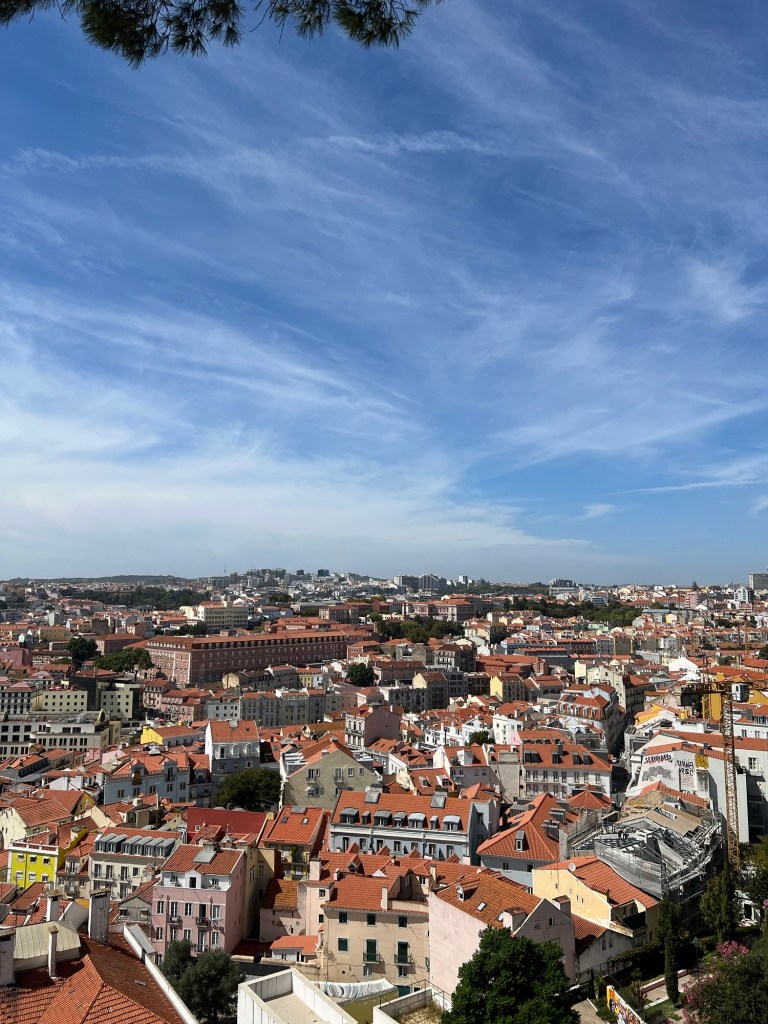
Lisbon has so much history, and in some ways the city is literally built on previous versions of itself.
A great example of this juxtaposition is the Baixa area of Lisbon compared to Alfama.
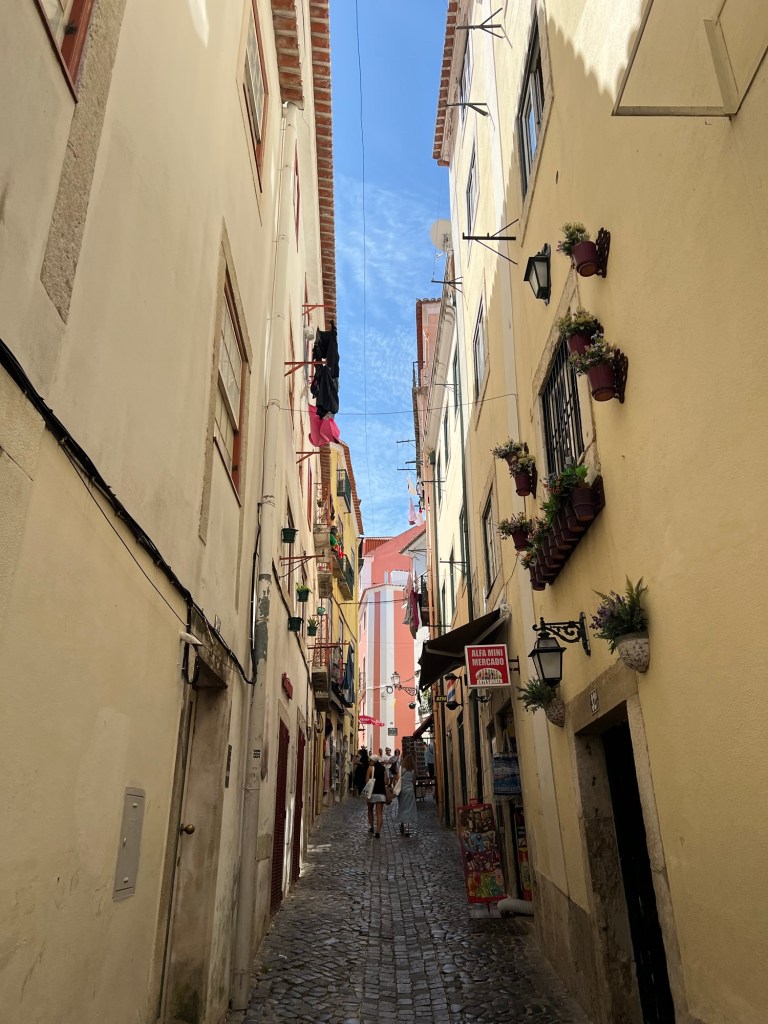
Alfama is one of the oldest parts of the city. Its narrow, winding streets still reflect the medieval city that existed through both Islamic and Christian rule. From the 8th century until the Christian conquest of Lisbon in 1147, this hillside formed part of Islamic Lisbon. After 1147, it remained an important neighborhood as the city continued growing around it.
Baixa, directly to the west of Alfama, developed into Lisbon’s lower commercial center, filled with homes, shops, and streets connecting areas around Rossio with the waterfront.
Then came the earthquake of 1755.
The earthquake devastated much of central Lisbon, including Baixa. Instead of simply rebuilding the neighborhood as it had existed before, the government redesigned it.
Long, straight streets replaced much of the old maze. Buildings were standardized. Broad squares and a grid were imposed on an area that had developed naturally for centuries.
It’s been described as an Enlightenment-era vision of what a city could be.
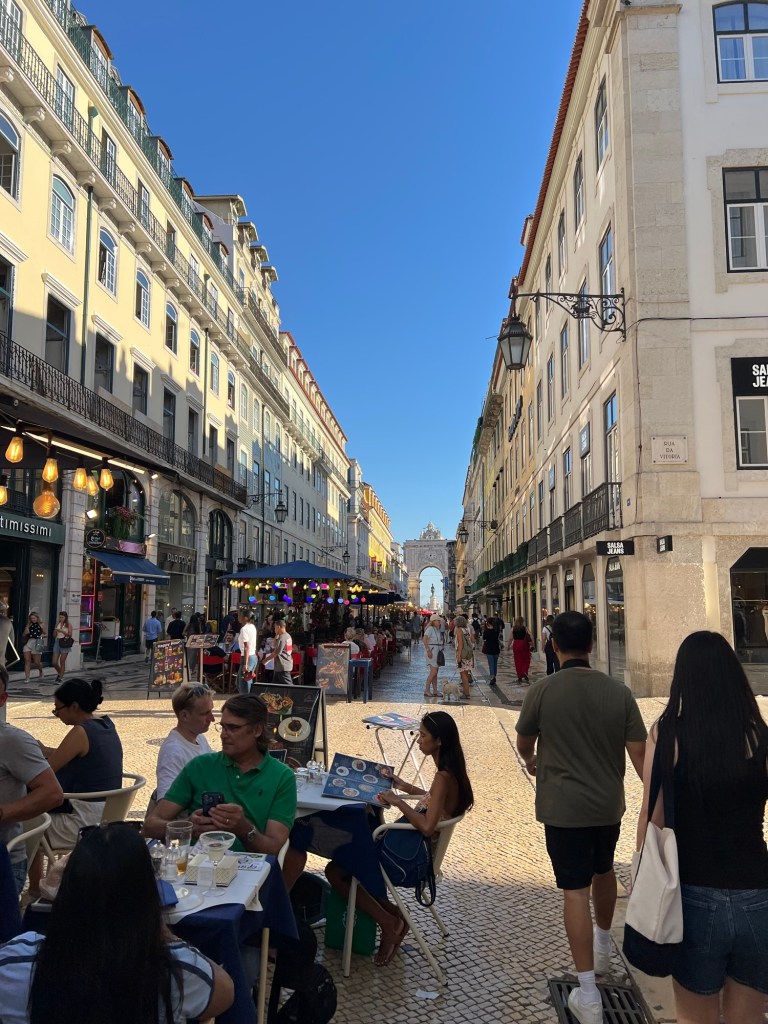
So now you have two parts of Lisbon right next to each other that physically represent different periods in the city’s history: the tangled maze of Alfama against the rectangular streets of Baixa.
In this example, it’s easy to see two different worlds of Lisbon side by side.
In reality, many of the worlds that exist within a city are much harder to distinguish.
Something I didn’t understand before coming here was how Lisbon’s position on the Atlantic shaped not only its importance throughout history, but also the people who live here today.
Lisbon’s port connected Portugal with South America, Africa, Asia, and other parts of Europe. Goods moved through the city, but so did people.
That history also includes Portugal’s role in the Atlantic slave trade. Enslaved Africans were brought to Lisbon and were a visible part of the city for centuries. Much later, migration from places such as Cabo Verde, Angola, Mozambique, and Guinea-Bissau created new communities in and around Lisbon.
Brazil was Portugal’s largest colony, and today there is also a large Brazilian population in Portugal.
I’ve met quite a few Brazilians since arriving here. One of them said to us, “Portugal has 11 million people. Brazil has 200 million. There are a lot of us here.”
The result is a city containing many different worlds within it.
Portuguese worlds. Cabo Verdean worlds. Angolan worlds. Brazilian worlds. Tourist worlds. And certainly countless others I don’t even know enough about to name.
For me, a traveler passing through, most of these worlds are almost impossible to see, but I find them fascinating.
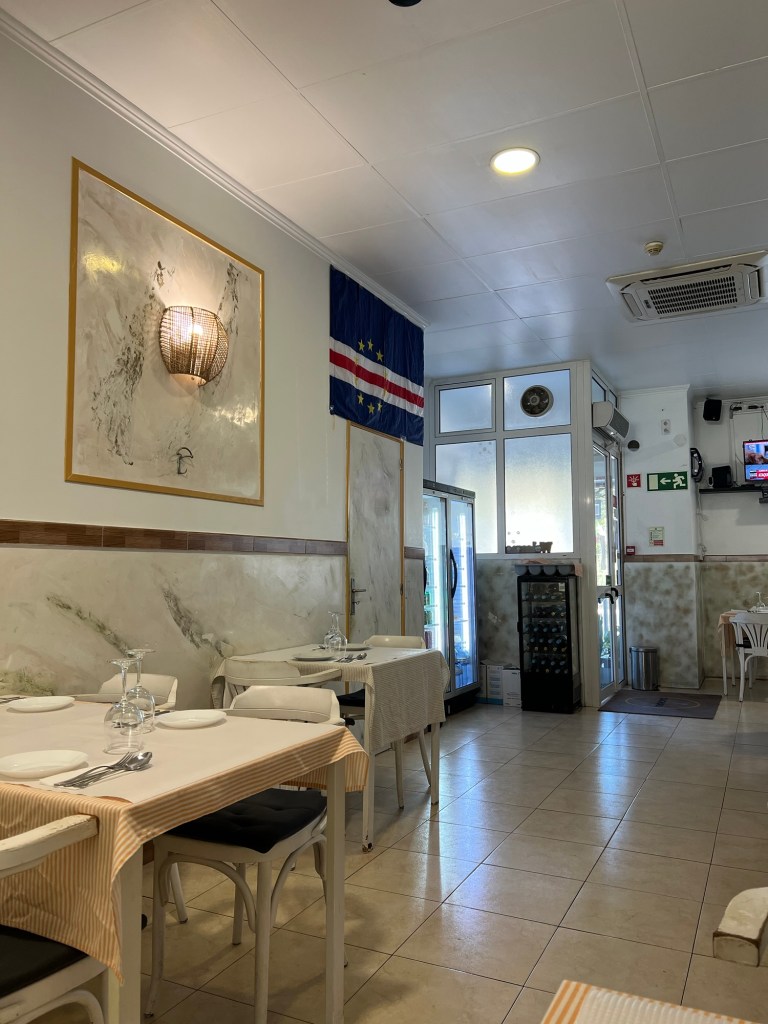
I was fortunate enough to stumble into one of those worlds by visiting a Cabo Verdean restaurant, where I tried a famous dish called cachupa.
Cachupa is a stew usually made with corn, beans, vegetables, and some combination of meat or fish, and it is widely considered Cabo Verde’s national dish.
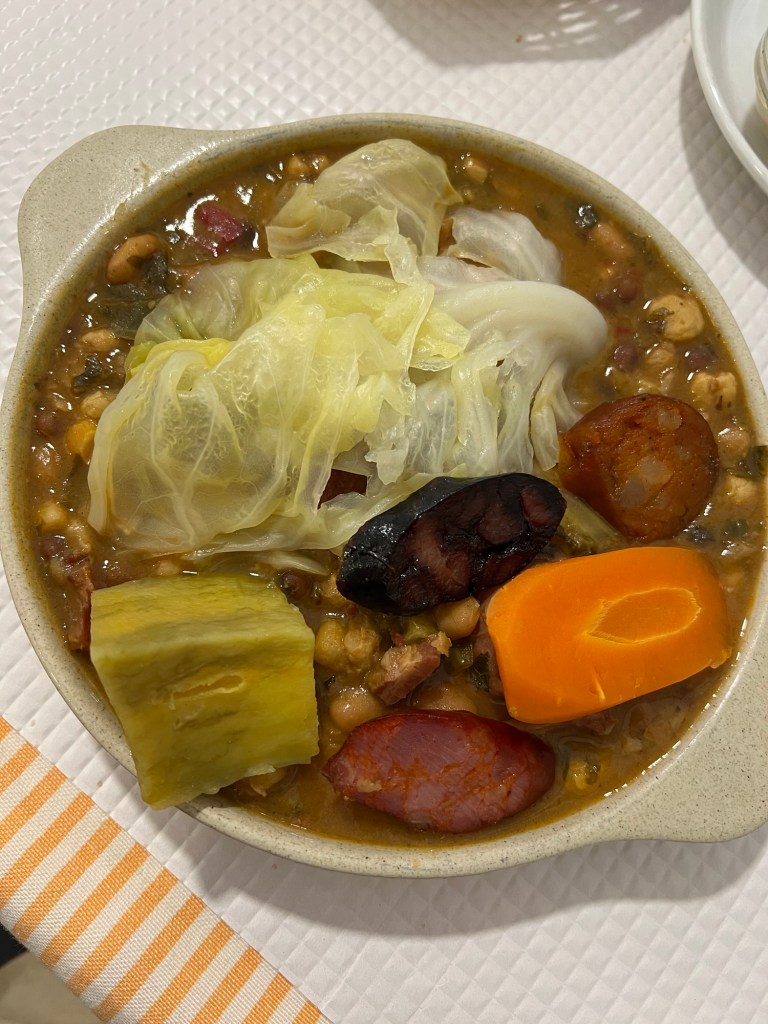
It was delicious, but what surprised me most was how familiar it tasted.
Growing up, my mother used to make black-eyed peas and ham hock. It was salty, savory, and hearty, and we loved eating it with cottage cheese.
Somehow, cachupa reminded me of those flavors I had almost forgotten, and for a moment, two completely different worlds collided.
I was sitting in a Cabo Verdean restaurant in Lisbon, and somehow I was thinking about my mom’s kitchen in California.
The more I thought about why that experience felt so special to me, the more I realized that maybe this idea of different worlds doesn’t only apply to cities.
I think we are all living at the intersection of many worlds at once.
My experience as a person of Japanese descent combined with my experience growing up in America created my own version of the Japanese American experience.
My experience as a basketball player combined with being someone who cared deeply about doing well in school created another identity as a student athlete.
Studying abroad in Thailand added another layer, eventually becoming part of my identity as someone who loves traveling and connecting with people from around the world.
And being born to parents who were committed to taking care of me and genuinely wanted the best for my future shaped almost everything in my life. They helped create the world I inhabit today.
None of these things exist independently.
They overlap and interact with each other, constantly creating new versions of who we are.
In that Cabo Verdean restaurant, I got a tiny glimpse into a world that exists within Lisbon and within Cabo Verdean culture.
It isn’t a world I will ever fully understand. Eating cachupa once certainly doesn’t mean I understand what it means to be Cabo Verdean.
But for a moment, I was exposed to a small piece of that world, and that piece became part of mine.
I think Lisbon is like every city in the world in that way.
If you are open to it, and perhaps a little lucky, there are thousands of worlds you might stumble into.
Most of them you will only ever see briefly.
But maybe traveling isn’t about collecting enough of them to finally understand what a place is.
Maybe it is simply about recognizing how many exist.
Occasionally, one of them might change your own world just a little bit.


Leave a comment