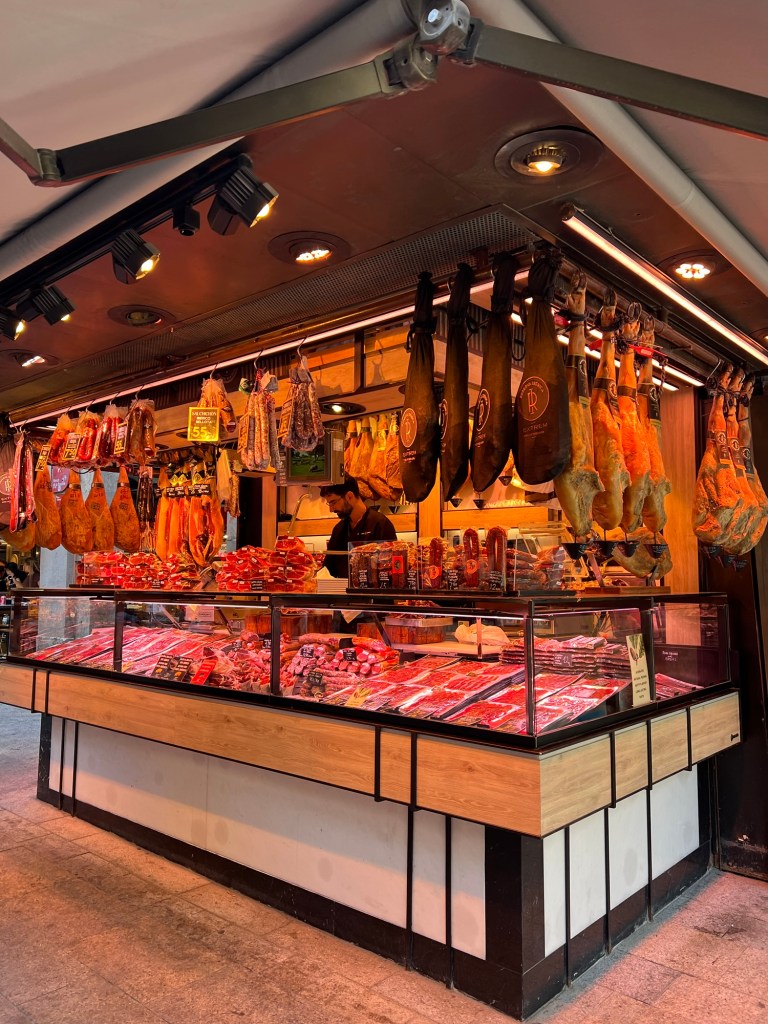
Day 8 – Our second day in Barcelona
Thankfully, I felt much better today, and just in time for one of my favorite days of the trip.
I have a lot to say and I’m not sure how to say it.
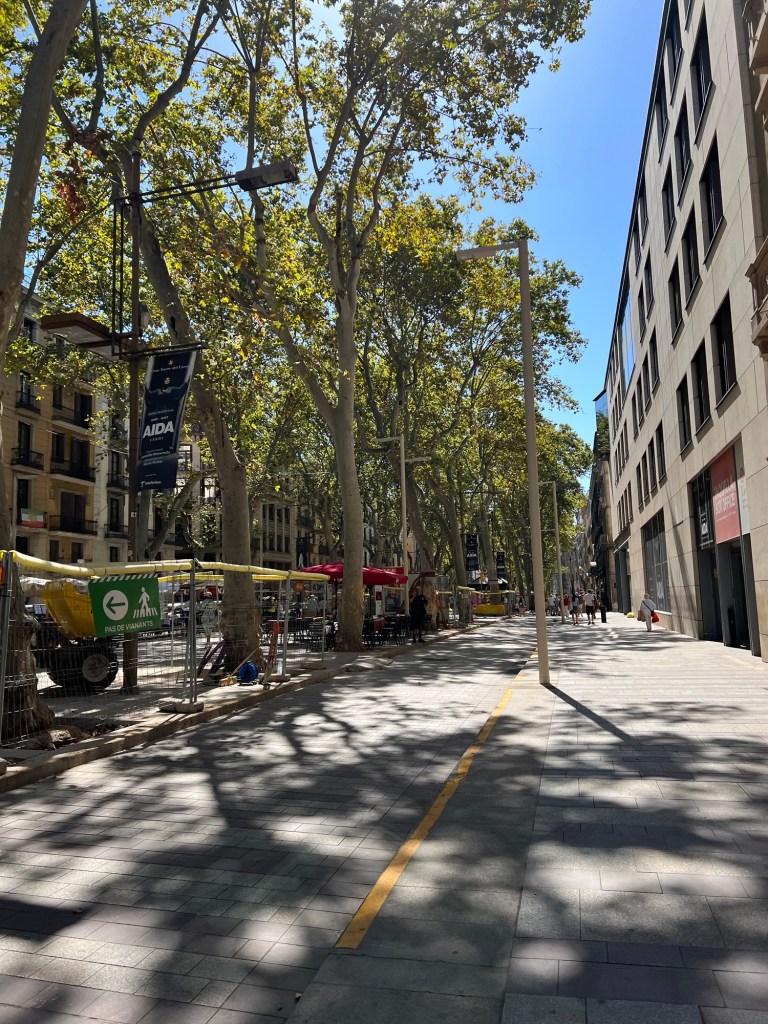
We started out by heading towards a street called La Rambla, historically one of Barcelona’s most important public spaces. It’s often described as one of the best places in the city to “see and be seen.” However, in recent years, there has been controversy over how much the street has changed due to tourism. Unfortunately, during our time there, it was also under major construction and not quite in its usual form.
We were interested in exploring a market called La Boqueria, which evolved from street market activity dating all the way back to the Middle Ages. The current municipal market began taking shape in 1840.
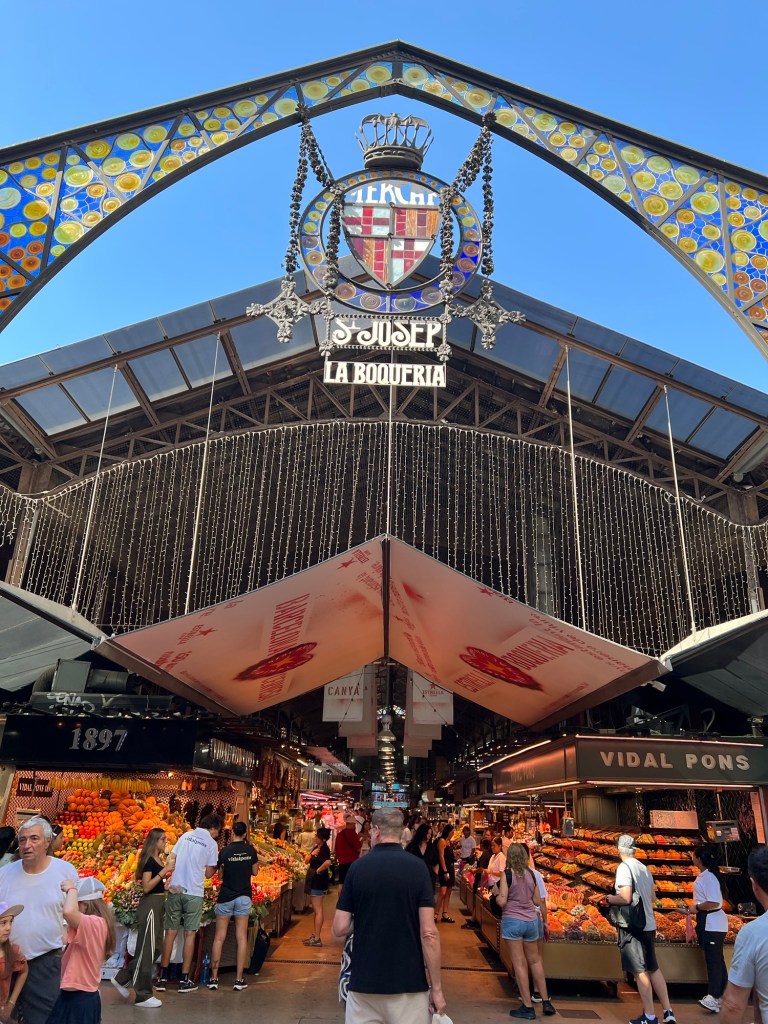
Walking through the market immediately reminded us of Gwangjang, a famous market in Seoul known for its narrow aisles, food everywhere, people eating shoulder-to-shoulder, and the overall feeling of being inside a local ecosystem.
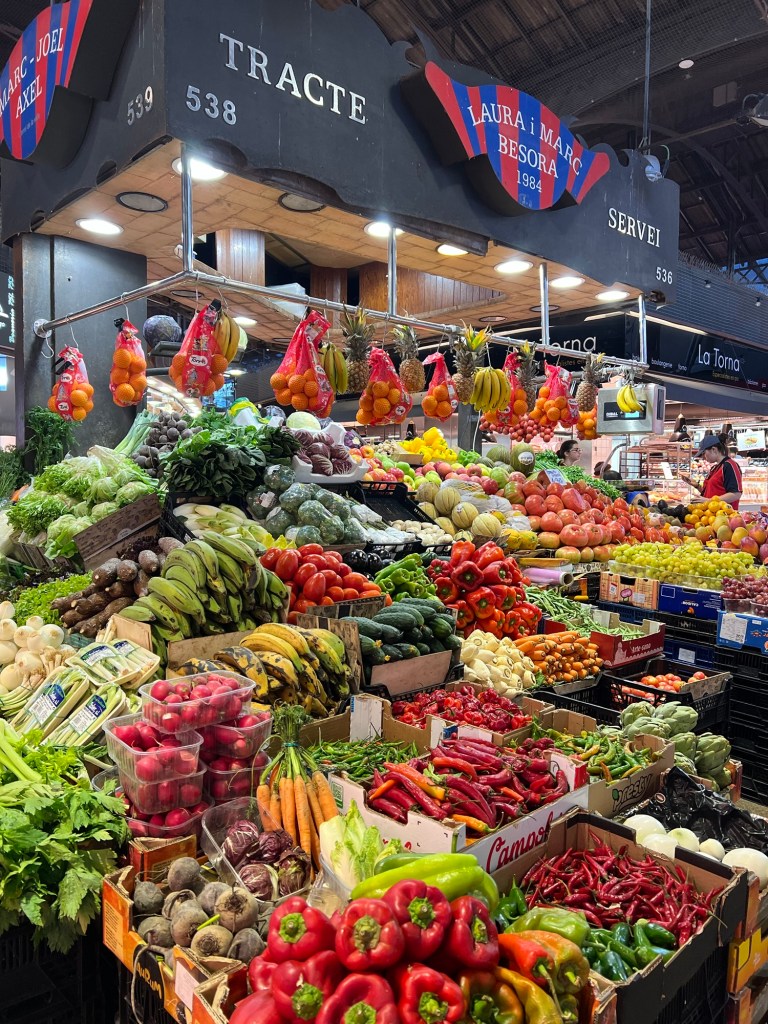
There were a few differences though.
Gwangjang also feels quite touristy these days, but La Boqueria seemed to have gone through a more complete shift towards catering to tourists. It didn’t really feel like a place you would go to buy your groceries. Instead, it felt like a place tourists go to take pictures of the stalls and buy overpriced food. Many of the stalls themselves seemed designed to quickly grab the attention of people passing through rather than somewhere you’d spend time browsing.
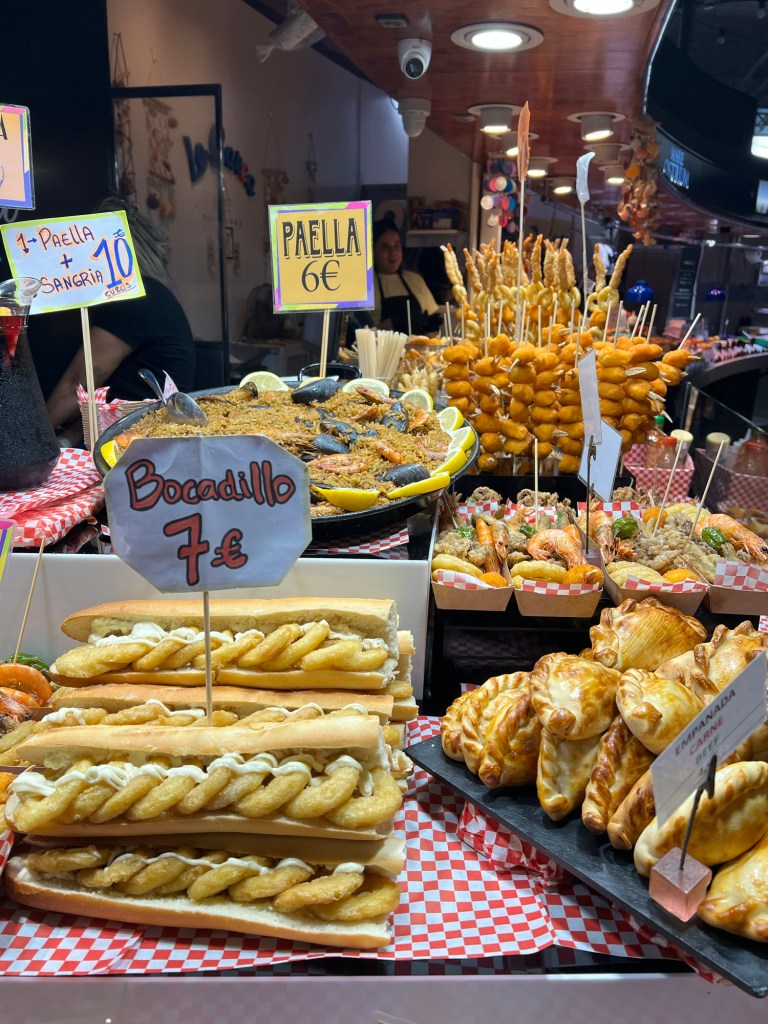
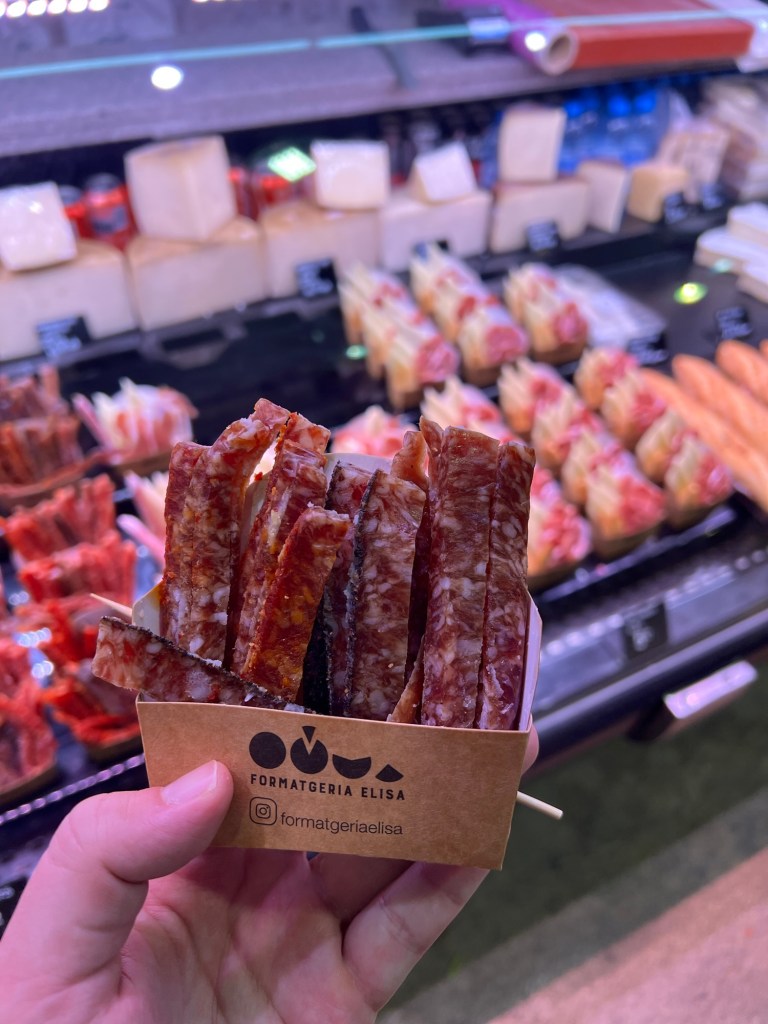
The market was beautiful, there was no doubt about that, and we enjoyed walking around taking in the sight of mountains of fish, meat, and produce. We bought a “mixed fuets” snack and tried three different kinds of Spanish cured meat.
After the market, we wandered around La Rambla, eventually making our way to the Barcelona Cathedral, one of the sites we wanted to see most while visiting the city.
Similar to the Eiffel Tower, it’s one of those buildings that can’t really be captured in photos.
It’s not just the size of the cathedral that is difficult to comprehend, but the complexity of the design and the sheer amount of detail in every part of the building. I imagine dissecting the meaning behind each detail would take quite some time.
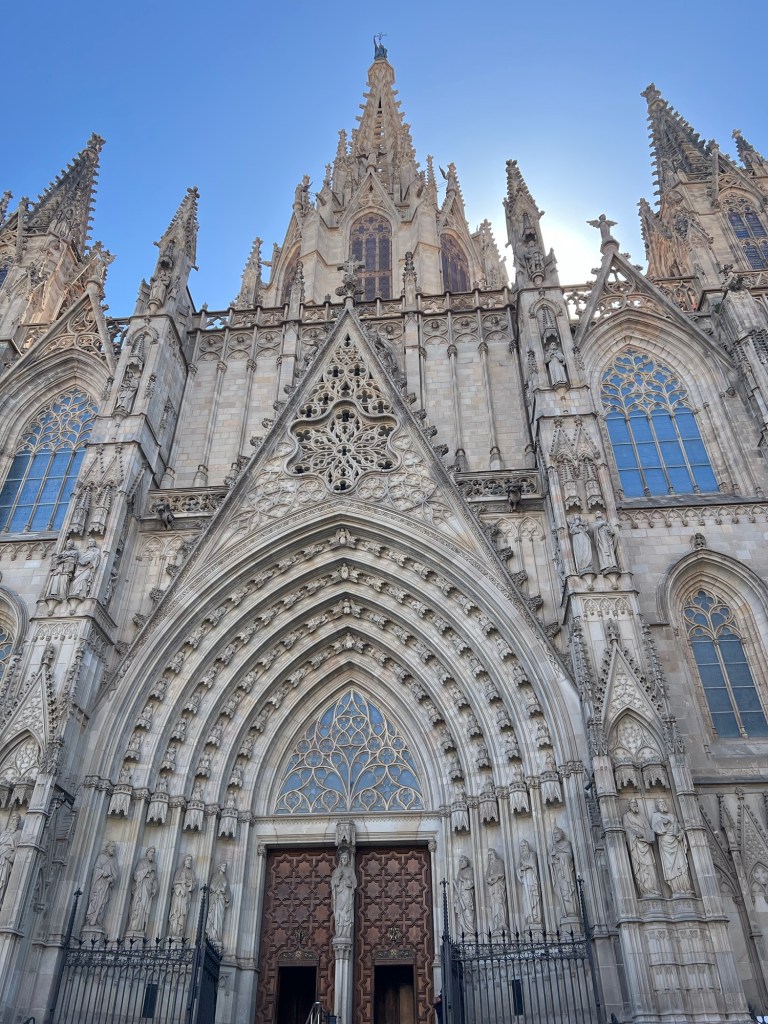
Construction on the Gothic cathedral began in 1298, and most of the main structure took roughly 150 years to complete. That timeframe is hard for me to wrap my head around. Generations of people worked on a building they would never see finished.
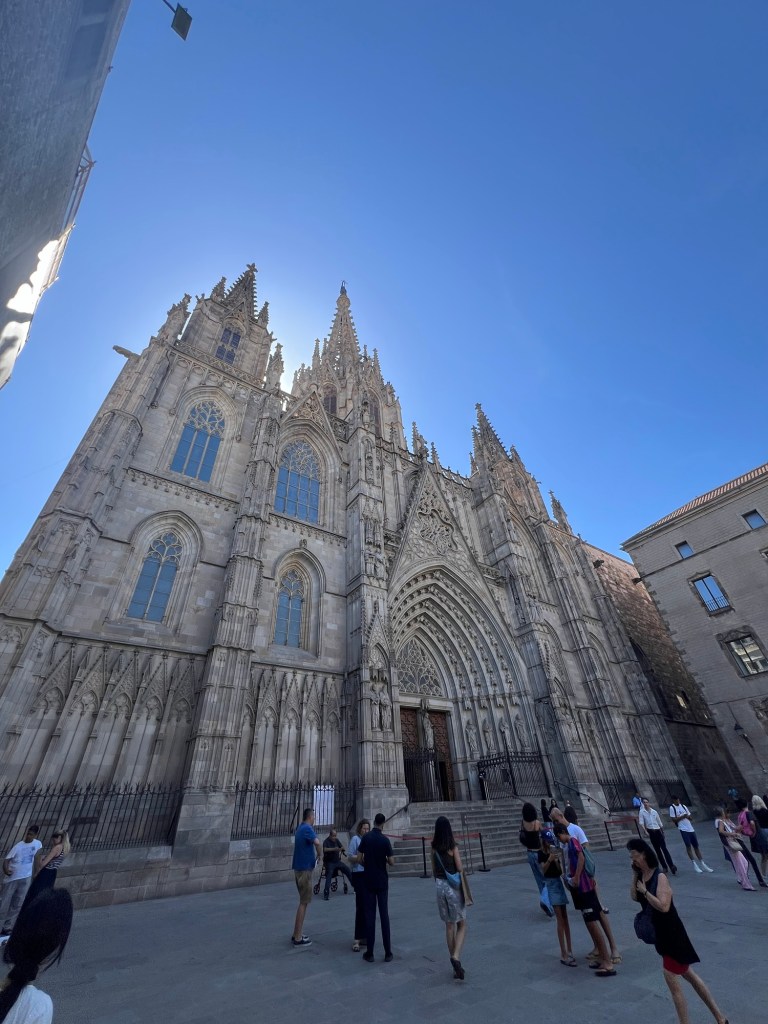
The end result is truly impressive.
It was now time for the best part of the day, lunch!
Today’s spot was chosen by Sara, and it ended up feeling much more local than the restaurants we went to yesterday. We entered around 1pm, and by the time we left, the place was packed with locals.
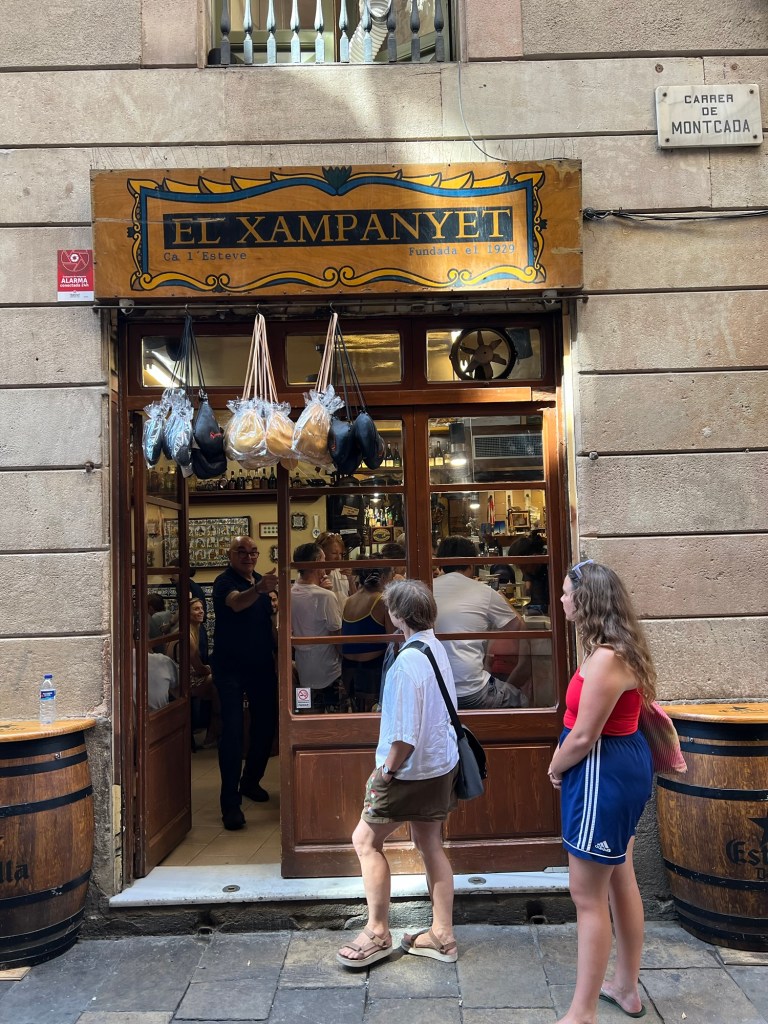
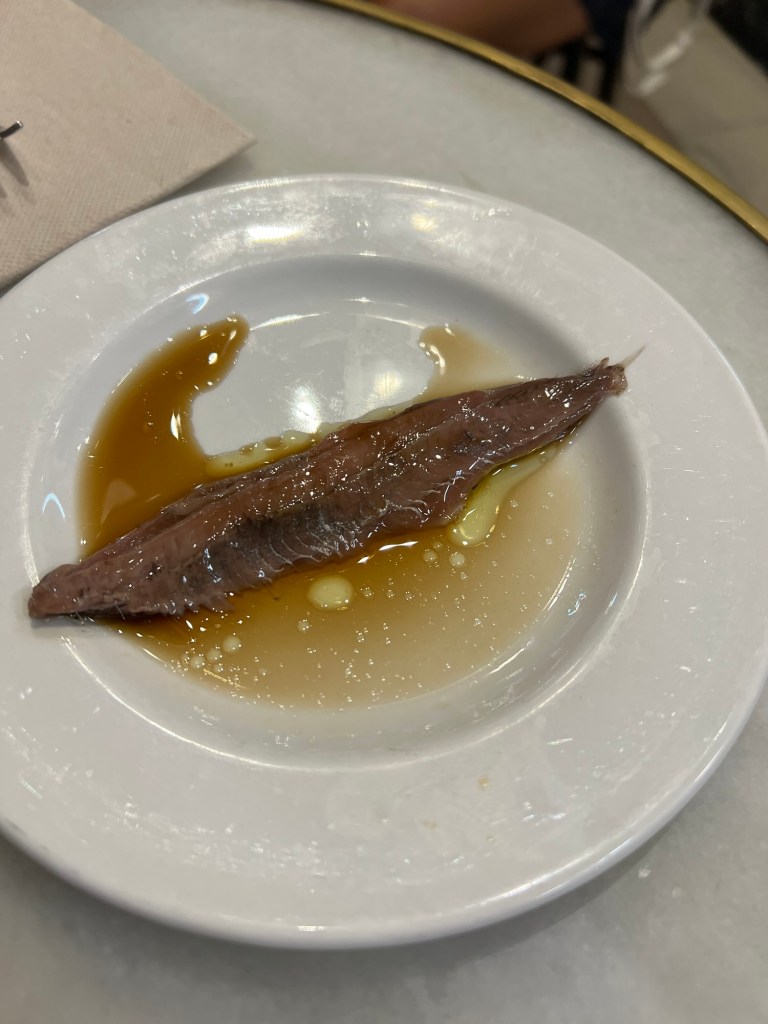
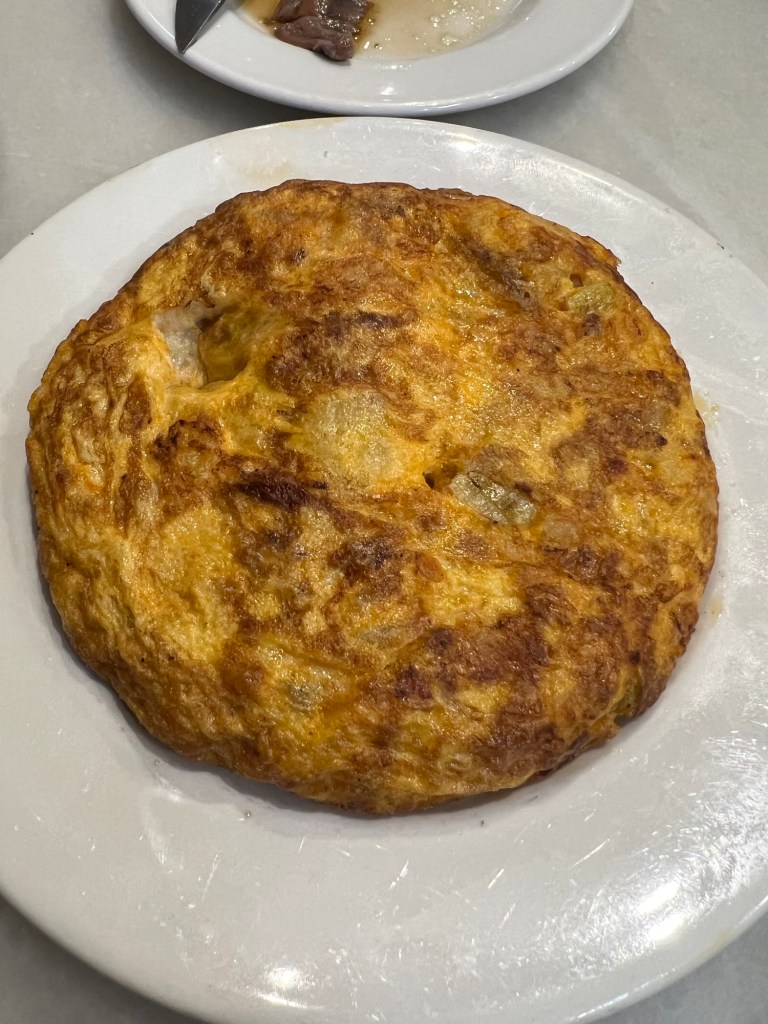
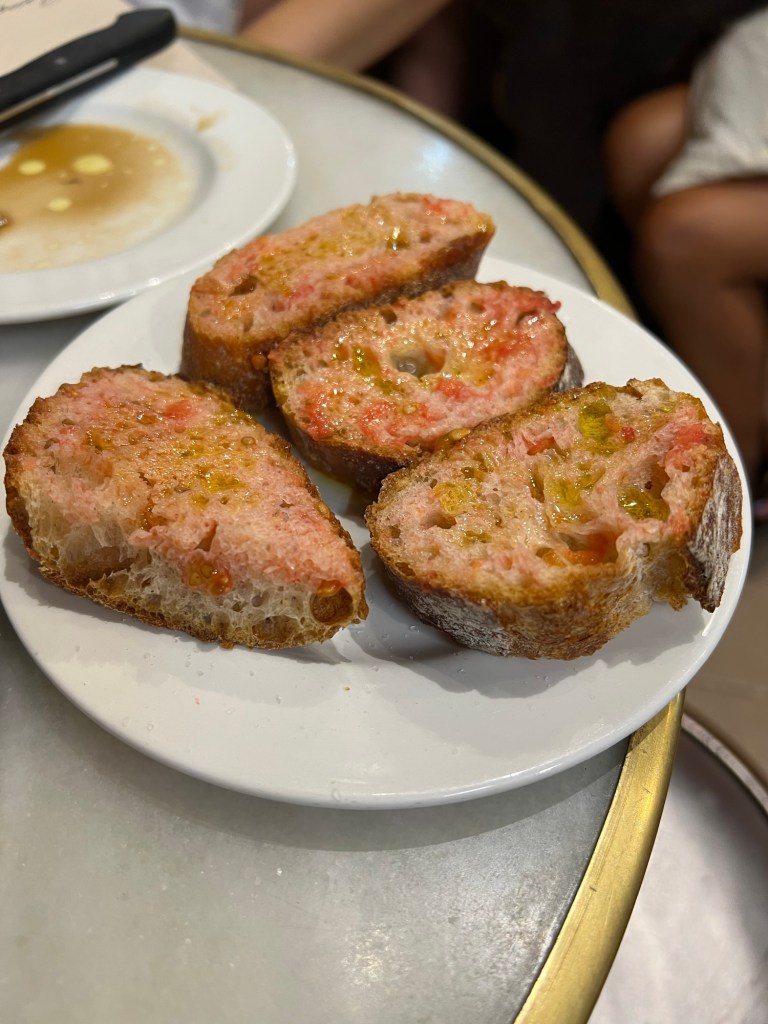
We ordered two beers, one “Barceloneta” anchovy, a Spanish omelette with chorizo, and four pieces of pa amb tomàquet, the classic Catalan tomato bread.
The anchovy was salty and the perfect beer snack. I was expecting more of a sharp vinegar taste, but the saltiness was the dominant flavor and it was delicious.
The Spanish omelette was the star of the show, made with eggs, potatoes, and chorizo. We couldn’t really see the chorizo, but it added so much flavor to the omelette.
The tomato bread was amazing. Plenty of tomato and a generous amount of olive oil.
Our waiter came over to ask if we needed anything else, and I took the opportunity to ask him to order something off the menu for us that he loves.
With no hesitation, he said, “I already have it, and you are going to love it.”
The dish was pluma ibérico, Iberian pork served with blistered Padrón peppers. The pork was so tender and flavorful that it really didn’t need much else. Eaten together with the Padrón peppers, it was amazing.
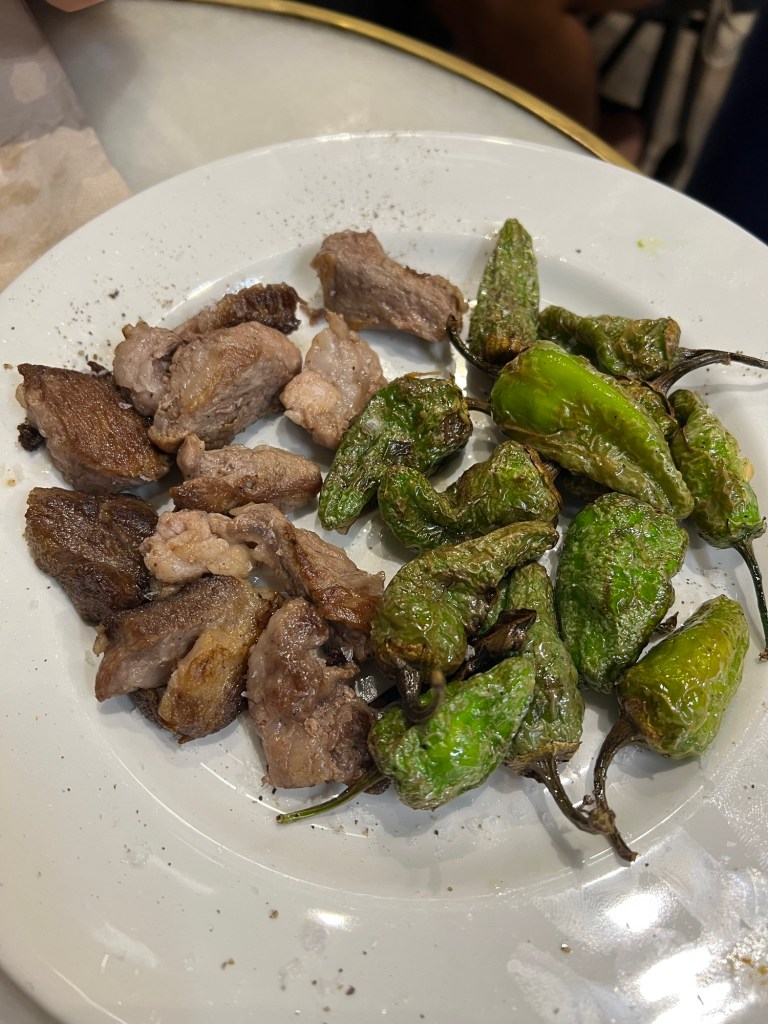
The peppers were actually spicy.
By the end of the meal, our lips were burning, a nice change after eating entirely mild foods for the last week.
After lunch, it was time to head to the beach.
We had been curious about what the Barcelona beach would be like and how it would compare to the beaches we visited in France.
It was hot.
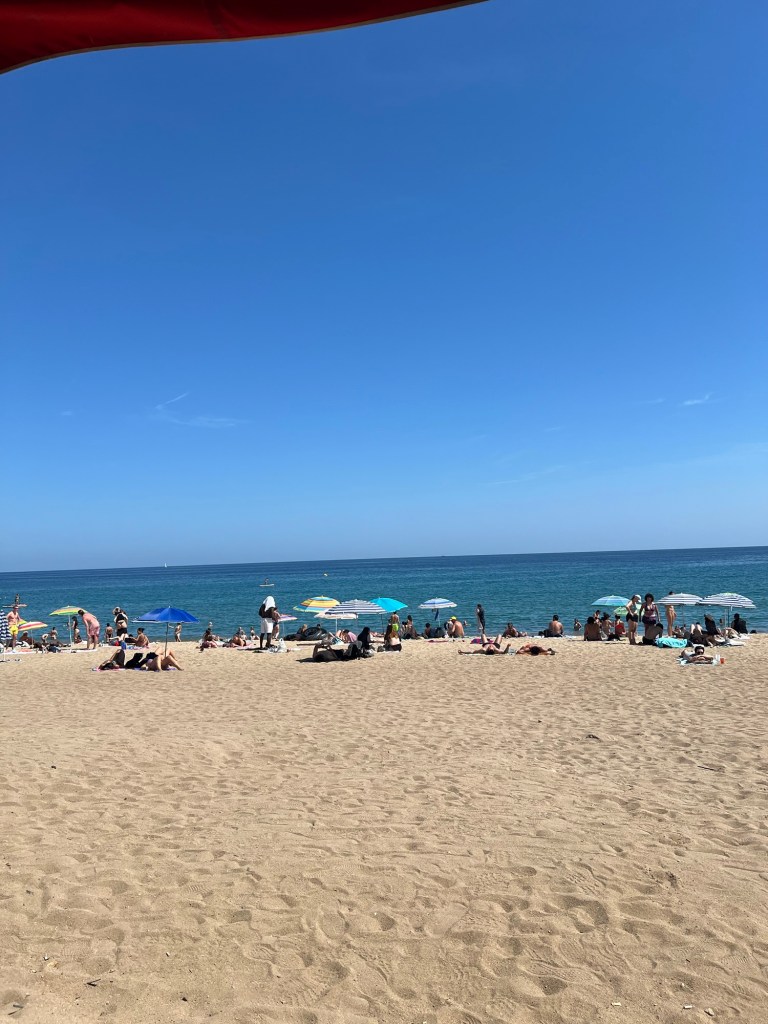
The sun felt much stronger than when we were in France, and unlike Menton, there was zero shade on the beach. We were confused at first because there were all these people walking around selling beach umbrellas, but the more we walked, the more we realized how necessary they really were. During the peak sun hours, it felt dangerously hot.
We eventually ended up at a beach bar with two beers, staring at the ocean and people watching.
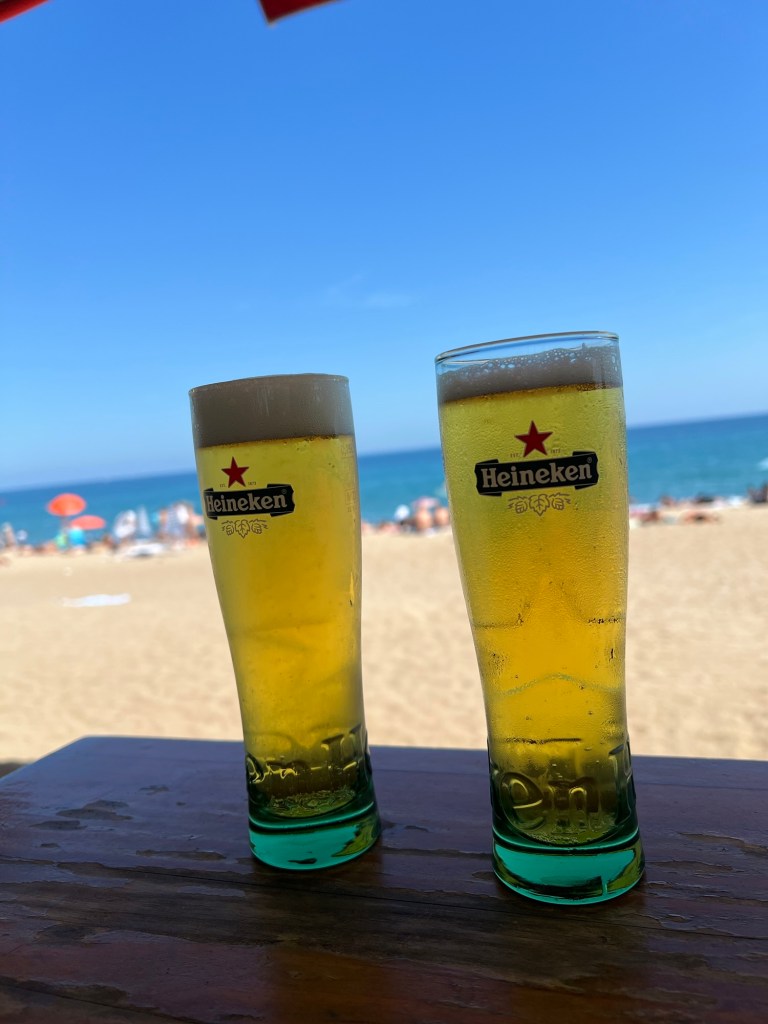
There was a group of American boys celebrating at the beach bar while sitting next to a group of European boys. It was really amusing to watch the differences in culture.
The Americans ordered the largest beers available, chugged them down quickly, and then ordered shots to follow. They dared one another to run into the ocean and come back, like kids. They seemed like they were in their early twenties and having a great time.
Meanwhile, next to them, there was a man on a Microsoft Teams call navigating through an Excel spreadsheet.
It looked like he had just spent some time in the water and was now taking a business call from the beach. He ordered a beer mid-call and then continued working.
Sara and I were amazed by the setup. It’s just not something we see very often.
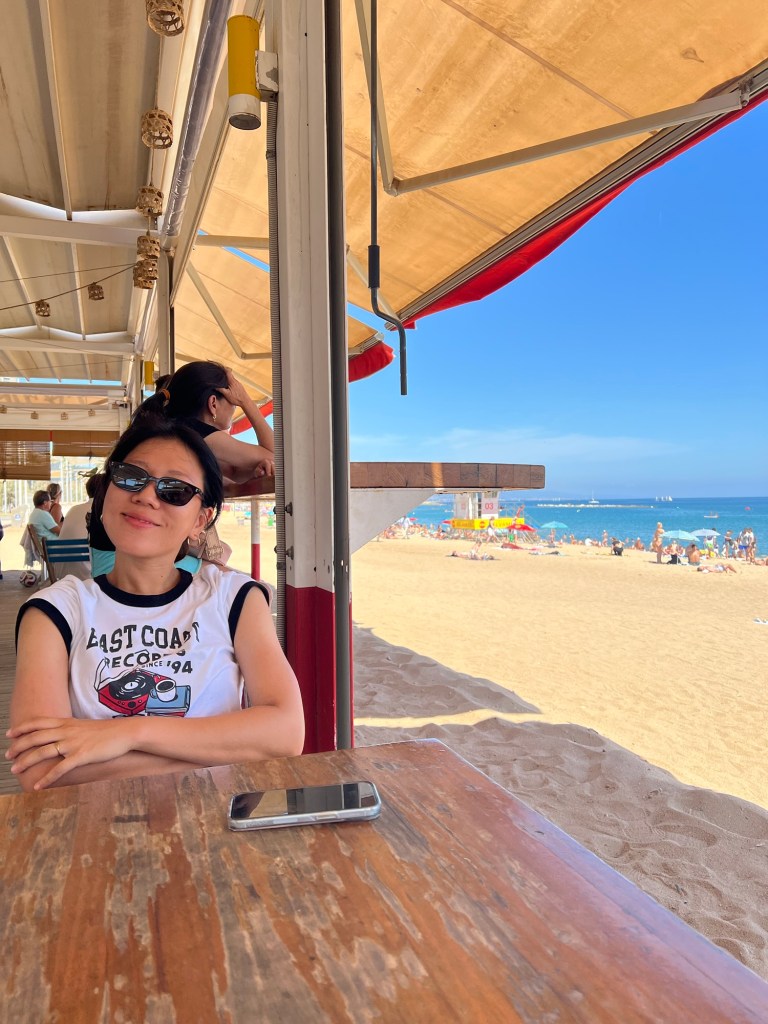
After finishing our beers, we found the Museum of the History of Catalonia nearby, and it ended up being one of my favorite experiences of the trip.
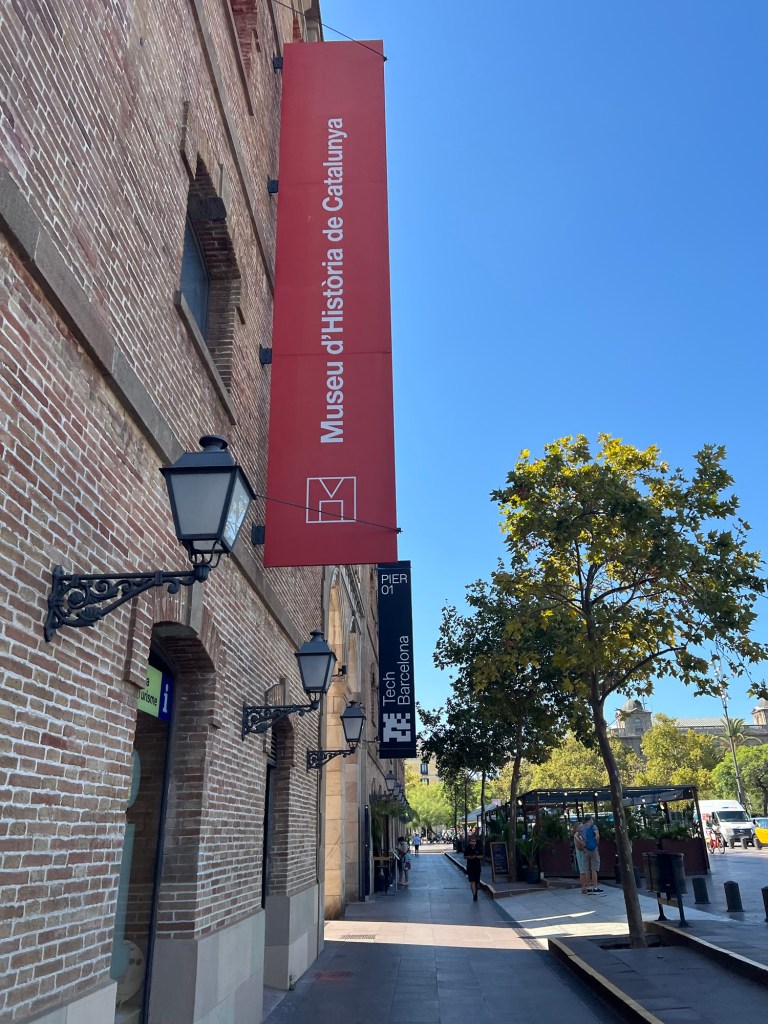
I didn’t know anything about Catalonia.
Before coming here, I thought of Barcelona simply as a famous city in Spain. But Barcelona is also the capital of Catalonia, a distinct autonomous community with its own language, flag, holidays, food, traditions, and a complicated relationship with the rest of Spain. There is even an ongoing debate over whether Catalonia should become an independent country altogether.
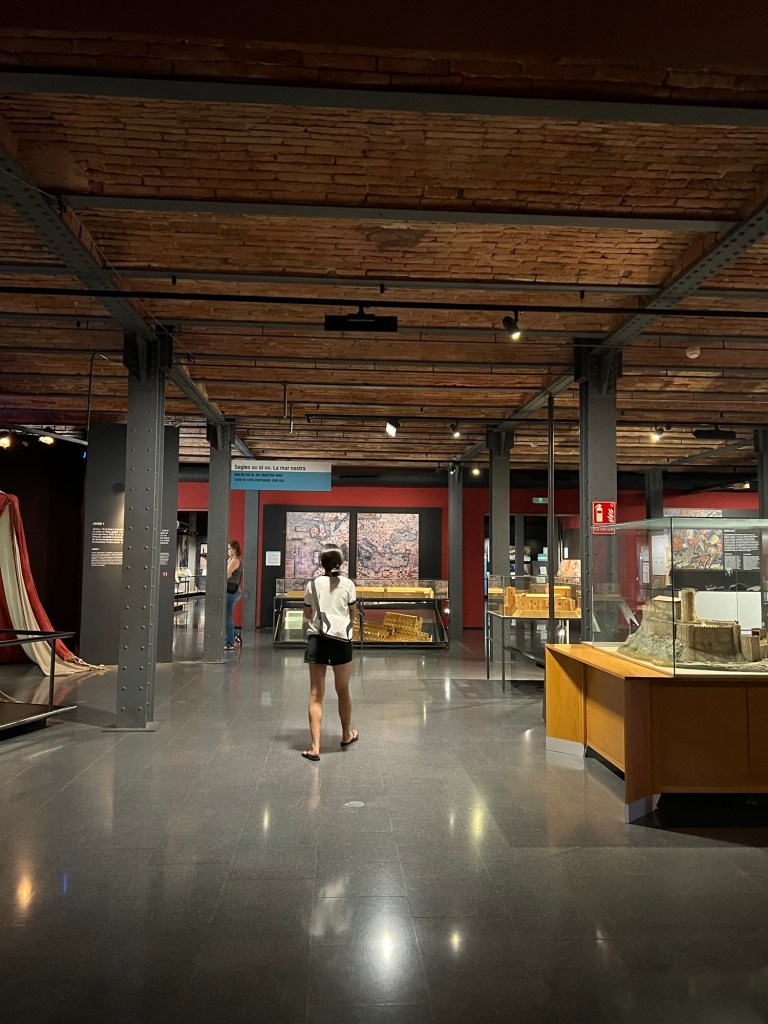
Catalonia’s roots stretch back roughly a thousand years, emerging from a collection of medieval counties that gradually developed their own political institutions and cultural identity. For much of its history, Catalonia existed as part of larger political arrangements while maintaining varying degrees of its own laws, institutions, language, and culture.
It’s the kind of history that is difficult for me to understand as an American. The United States is so much younger, and I’m used to thinking about political identity in terms of relatively clear national borders. Catalonia’s history doesn’t fit neatly into that framework.
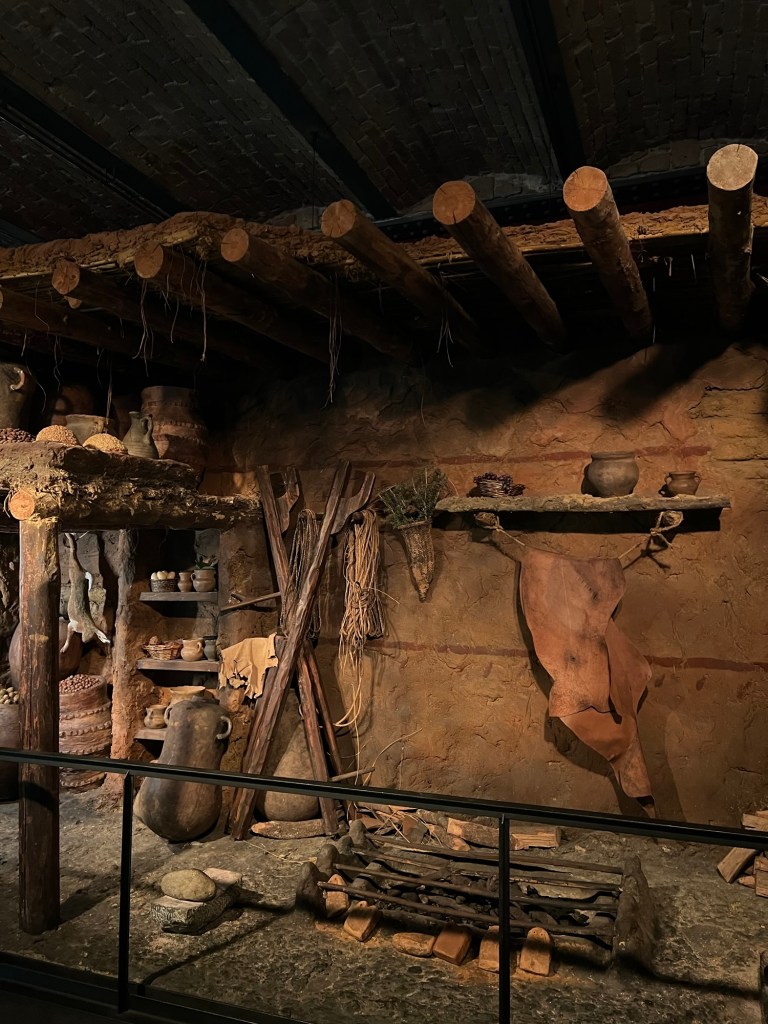
The endurance of Catalan culture throughout all of this is extremely impressive to me.
Not only did Catalan culture survive centuries of changing political arrangements, but during the dictatorship of Francisco Franco from 1939 to 1975, Catalan institutions were abolished and the language and culture were actively suppressed from public life.
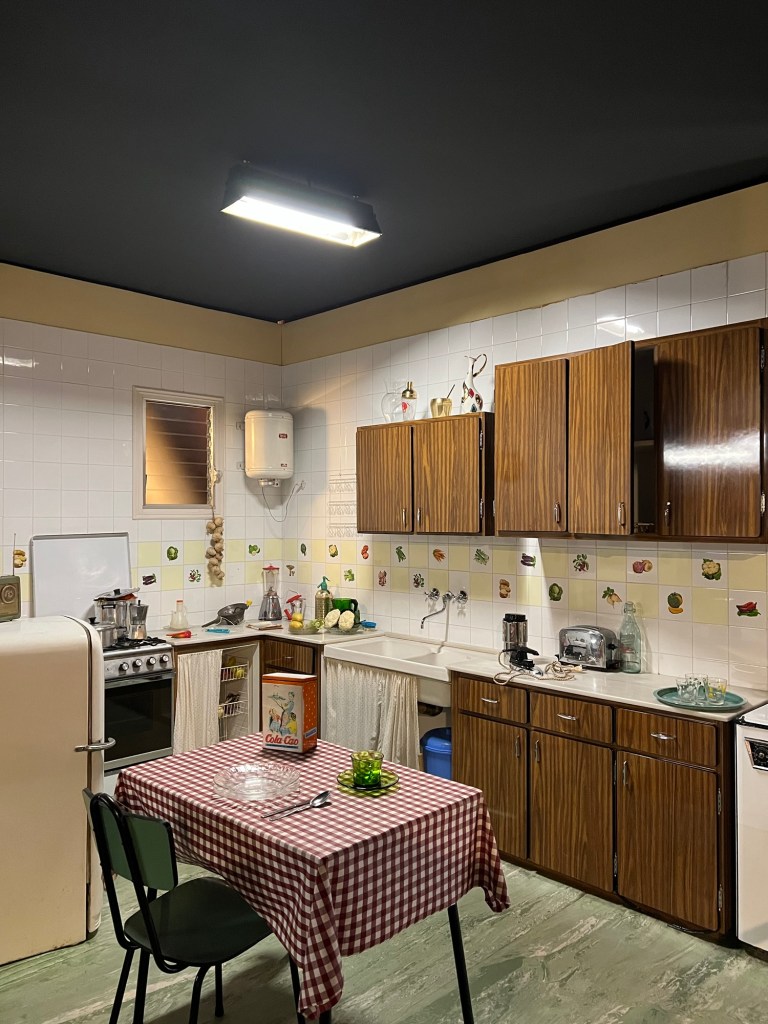
And yet, Catalan survived.
The language survived. The food survived. The traditions survived. The identity survived.
Suddenly, the pride we felt from our taxi driver when I asked him where he was from made a lot more sense. He was Catalan, and very proud of his culture and roots.
For dinner, we decided we wanted to go to an authentic Catalan restaurant. After much research, we settled on Restaurant Portolès, conveniently located near our hostel.
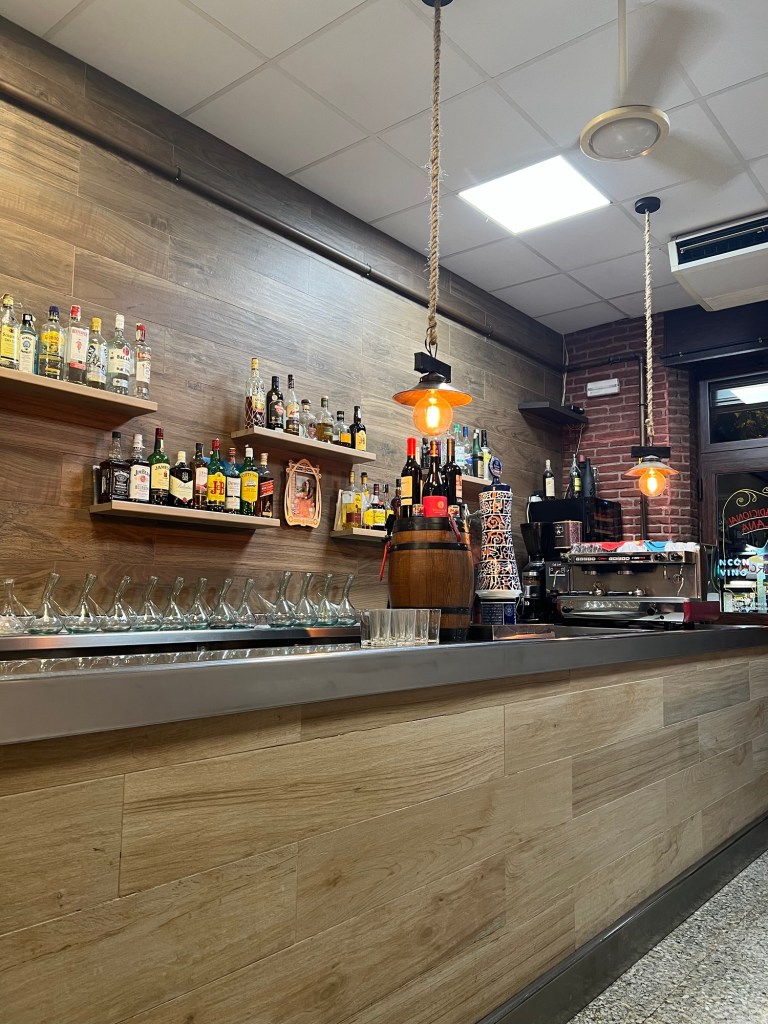
The restaurant is open for service between 1–4pm and 9–11pm. We had not yet eaten dinner during local hours, around 8pm or later, and were looking forward to the experience.
I’ve never eaten dinner so late before. Usually, if Sara and I eat anything past 9pm, we call it a “cheeky night snack.”
We walked into the restaurant right at 9pm and it was already filling up. Most of the people seemed to be older local residents, which felt like a good sign.
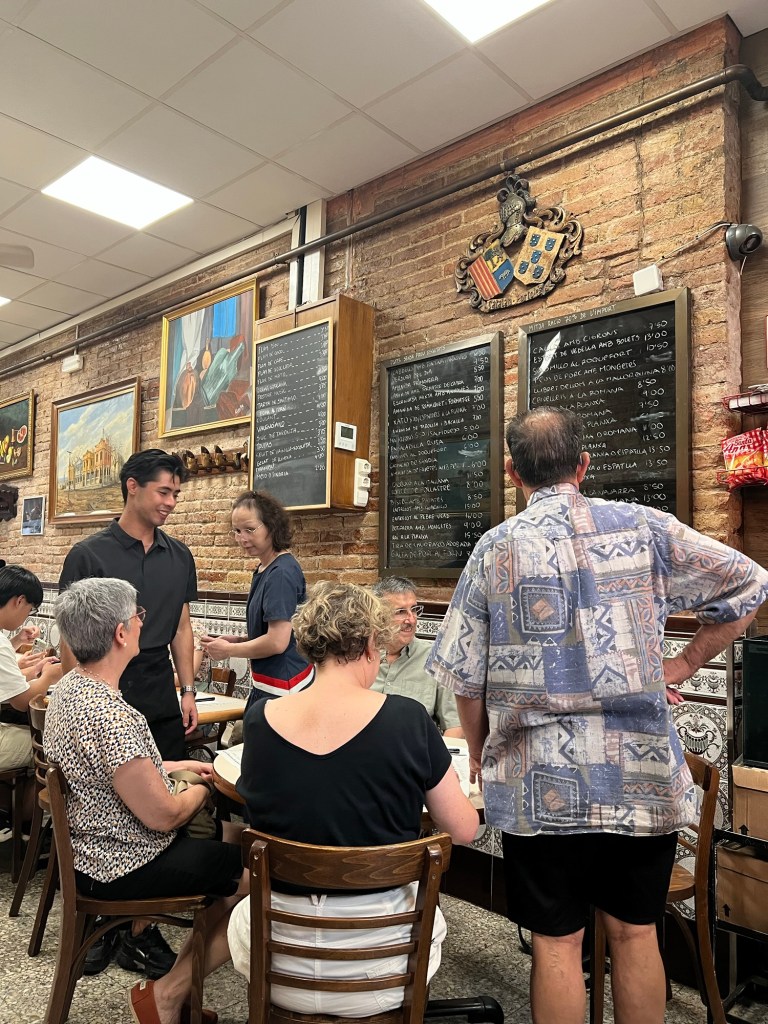
The menu was entirely in Catalan, and the waiter recommended that we translate it into English using our phones. Luckily, I had already done my research and was prepared to order the things we were interested in trying.
The waiter asked us what we wanted to drink and we mentioned that we were interested in trying red wine. He told us they had a local red wine they liked to drink with dinner out of a special glass pitcher called a porró.
Of course, this was exactly what we were looking for.
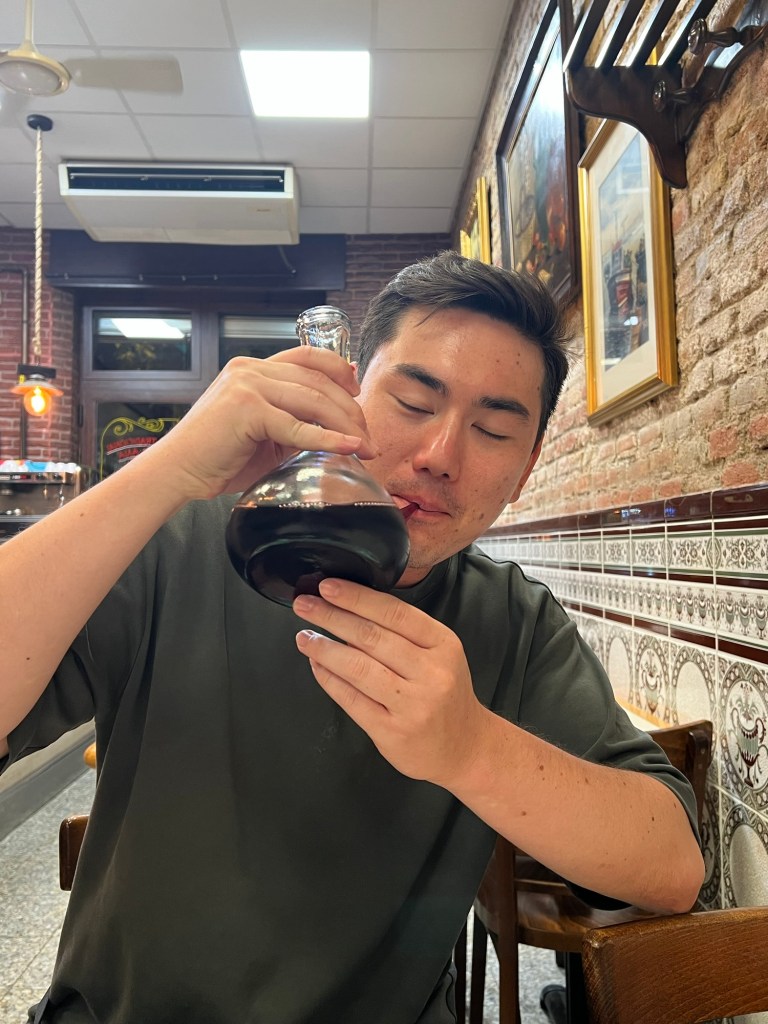
He brought us the porró and two wine glasses and explained two different methods of drinking from it. We could pour the wine normally into our glasses, or use the long narrow spout to pour the wine directly into our mouths.
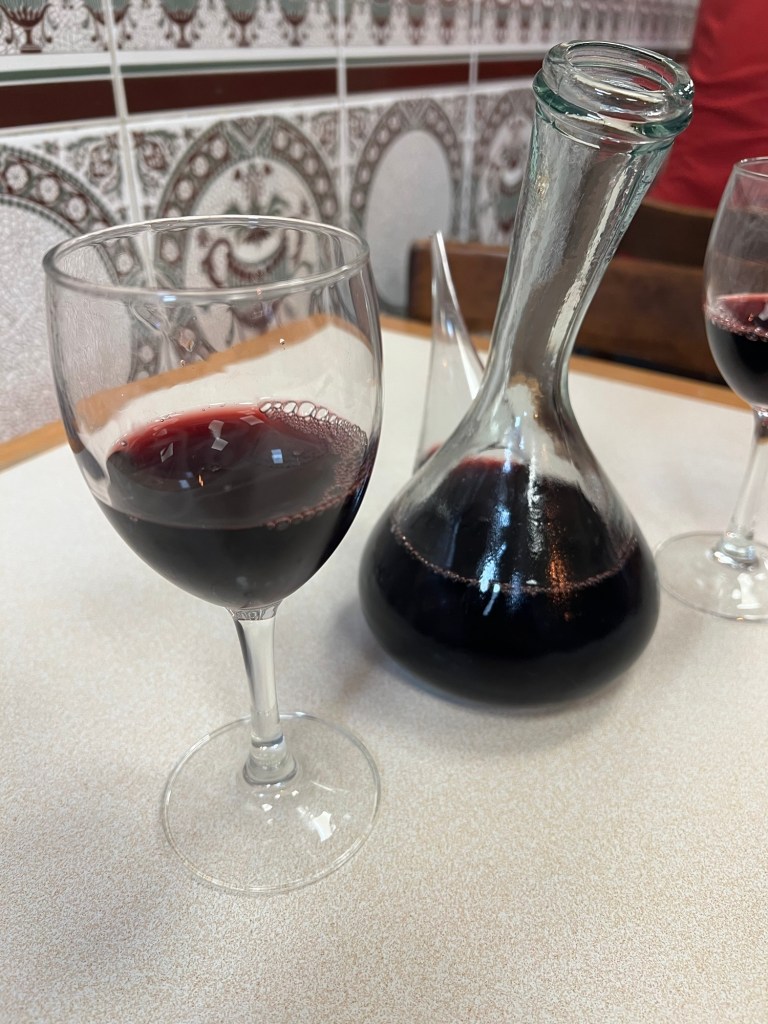
He warned us to be careful because this was red wine after all.
The wine was amazing, and I had a lot of fun trying to pour it directly into my mouth without spilling it all over myself.
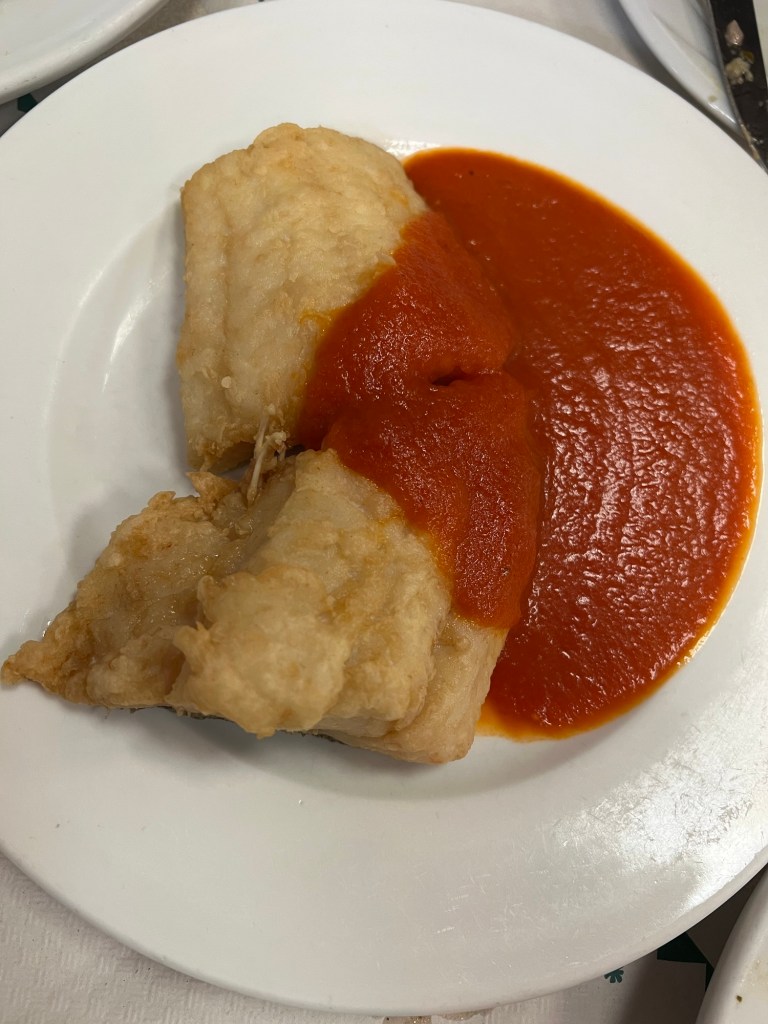
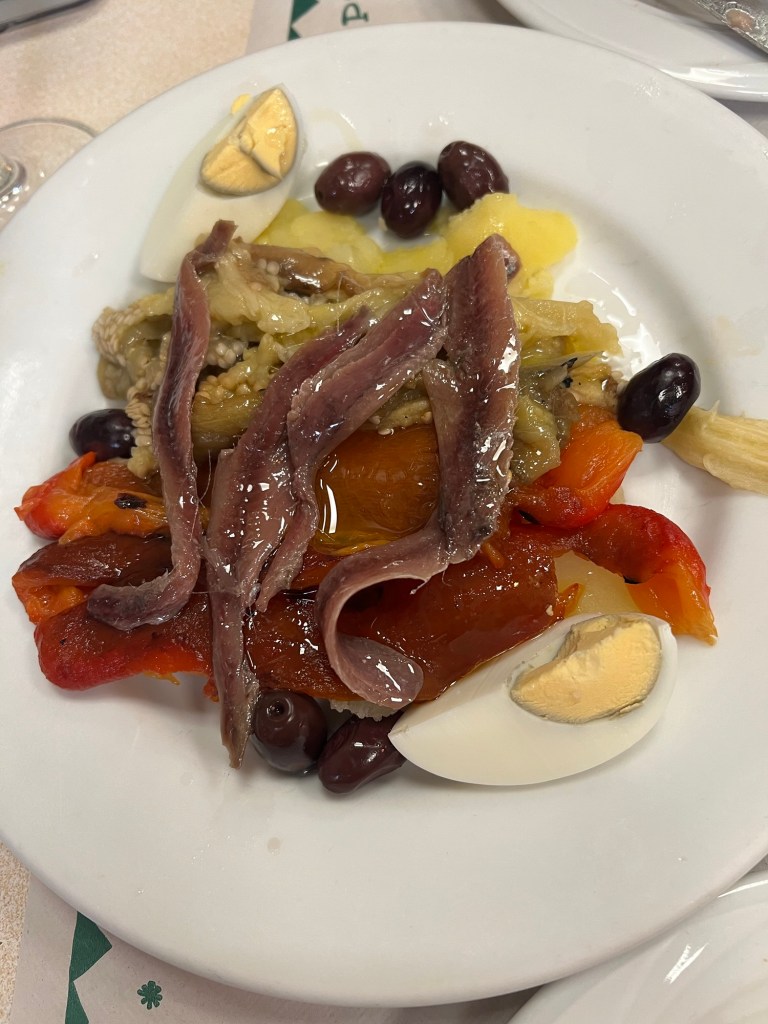
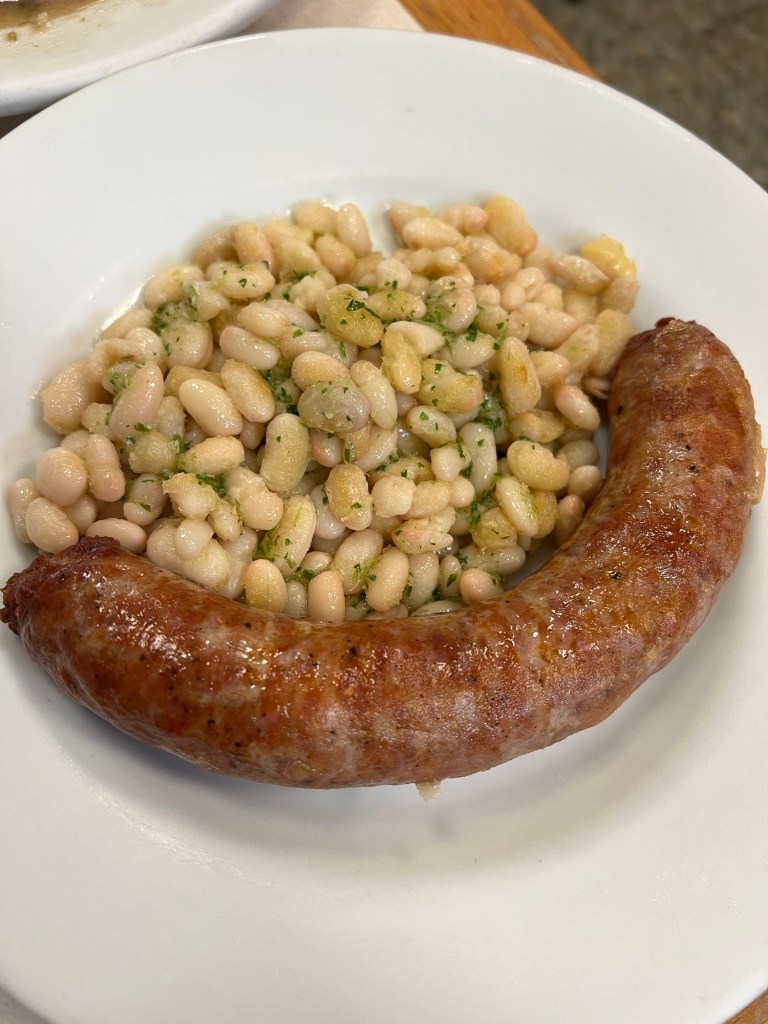
For dinner, we ordered escalivada mixta amb anxoves (roasted peppers, eggplant, and potato topped with anchovy), botifarra amb mongetes (pork sausage with white beans), bacallà amb tomàquet (cod with tomato sauce), and then asked the waitress for a fourth recommendation.
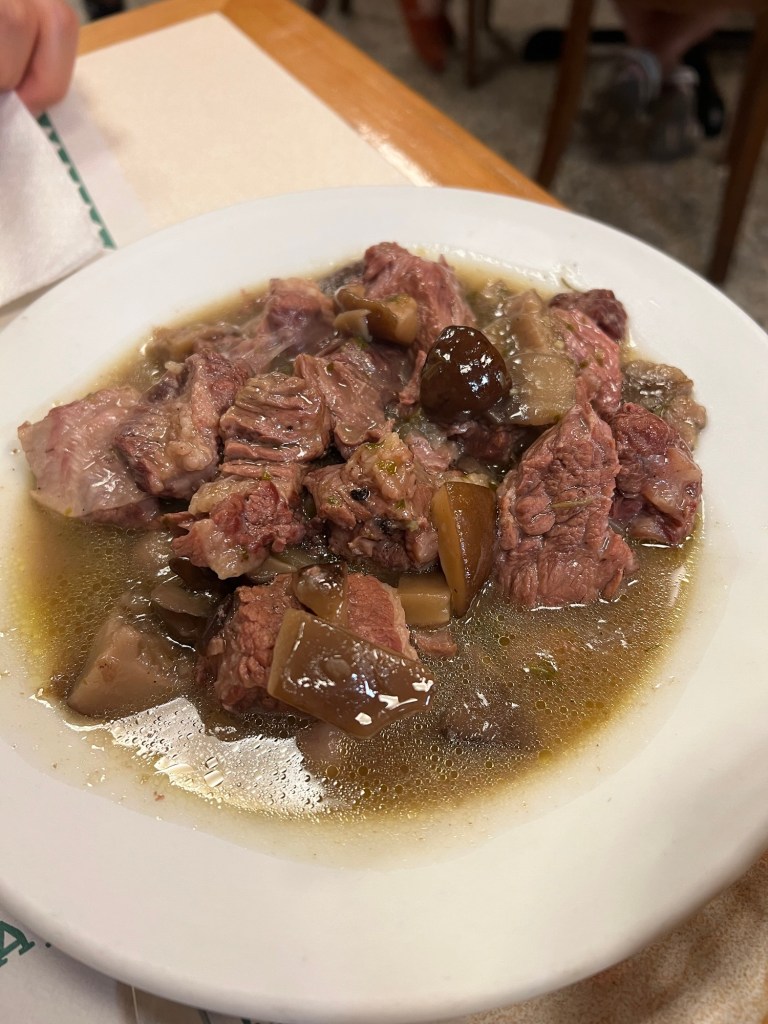
She suggested estofat de vedella amb bolets, a beef stew with mushrooms and apparently one of their most popular dishes.
Everything was delicious.
The food was much different from the other dishes we’ve had in Spain so far. It tasted more homey.
I can only describe it as soul food.
It’s possible that my experience was influenced by everything I had just learned about Catalan history during the day, but I felt like there were deep flavors in each bite, even though some of the dishes themselves were relatively simple.
The cod was similar to cod I’ve had before, but the combination with the slightly sweet tomato sauce was fantastic.
The roasted vegetables and anchovy created completely different flavors depending on what you combined into a single bite. It reminded me a little of making a ssam in Korean cuisine, combining pork belly, ssamjang, kimchi, and whatever else is on the table to create something greater than each ingredient on its own.
The beef stew reminded me of an American pot roast, but the herbs and spices were completely different from anything I was familiar with. I couldn’t identify what I was tasting, but the end result was a delicious stew unlike any I’ve had before.
The pork sausage and white beans were one of my favorites. The sausage was heavily seasoned with spices that didn’t taste common to me in the US, and the white beans seemed to be prepared simply with oil, garlic, and pepper. Together, they were incredibly good.
Our Catalan dinner was another one of those moments that felt very special to me.
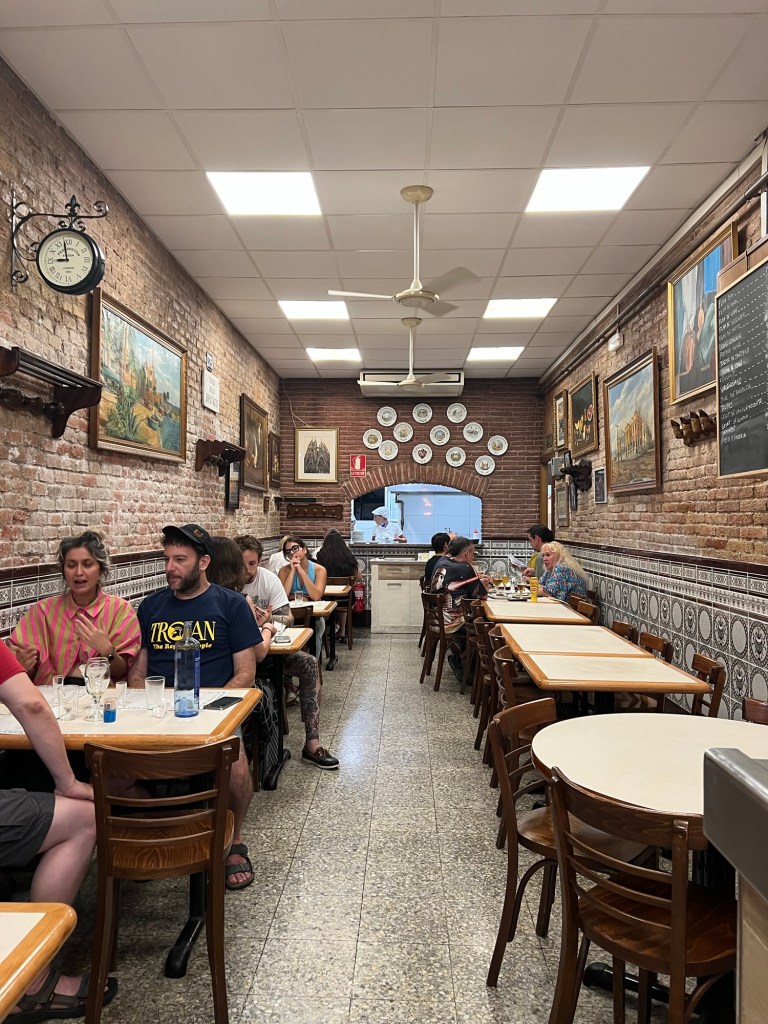
We had spent the last two days learning about Catalan culture for the first time, and this meal felt like the culmination of that journey. I felt like I could understand the beauty of the food in more ways than one once I had the context of just how far these recipes had traveled through time.
They could have easily been lost somewhere along the way.
Languages disappear. Traditions disappear. Recipes disappear. Cultures disappear.
But somehow, this culture made it through centuries of political change, war, suppression, and everything else that happened here. People continued making these dishes, teaching them to their children, and passing them down from one generation to the next until, eventually, they made their way onto our plates.
I was grateful for the experience.
 williamwataru
Leave a comment